Power Yield update, first live node revealed: a 300 kW power station in Thailand

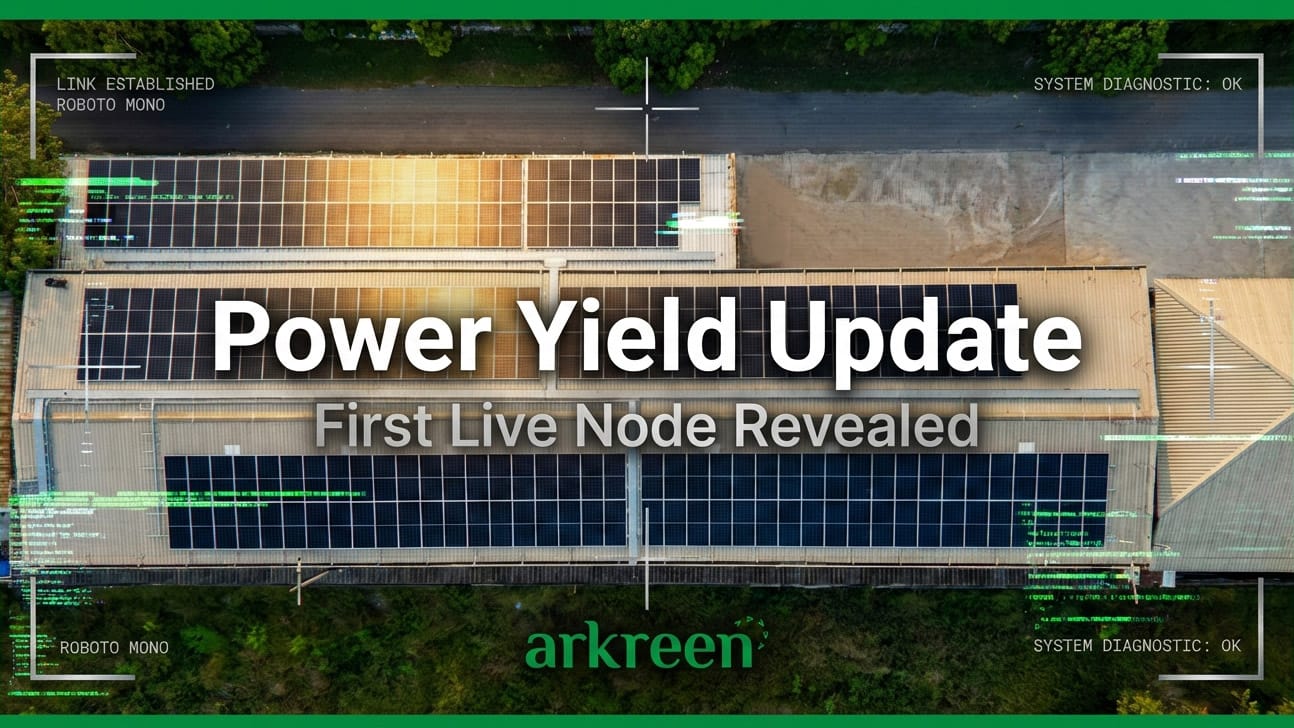
Today we move from concept to concrete. Power Yield’s inaugural infrastructure node is live, a 300 kW commercial solar installation in Thailand, and it is the first asset to run full Power Yield logic: on‑chain metering, stablecoin cash‑flow distribution, and AKRE utility capture. The images below document the installation, the metering array, and the local integration points, and they show what a production-grade DePIN node looks like in the field.
Images: all images below include photos of the real Thailand installation. They are included to show the operational reality behind the Power Yield promise.
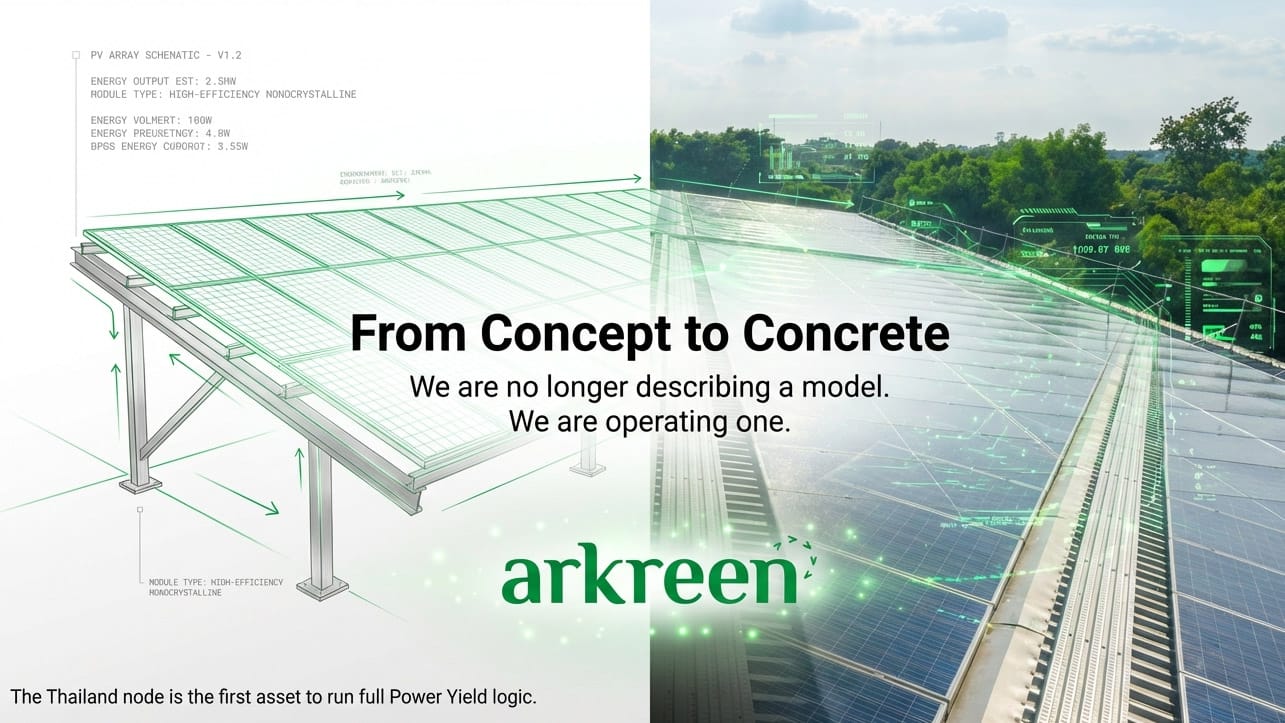
The original Power Yield announcement described a product architecture. This update proves the architecture. We are no longer describing a model, we are operating one. The Thailand node is a working blueprint that validates three critical claims simultaneously: verifiable generation, auditable settlement, and token-aligned utility. For partners and allocators that evaluate risk by seeing, touching, and reconciling cash flows, this is the moment the narrative shifts from theoretical to operational.
What we deployed, in practical terms
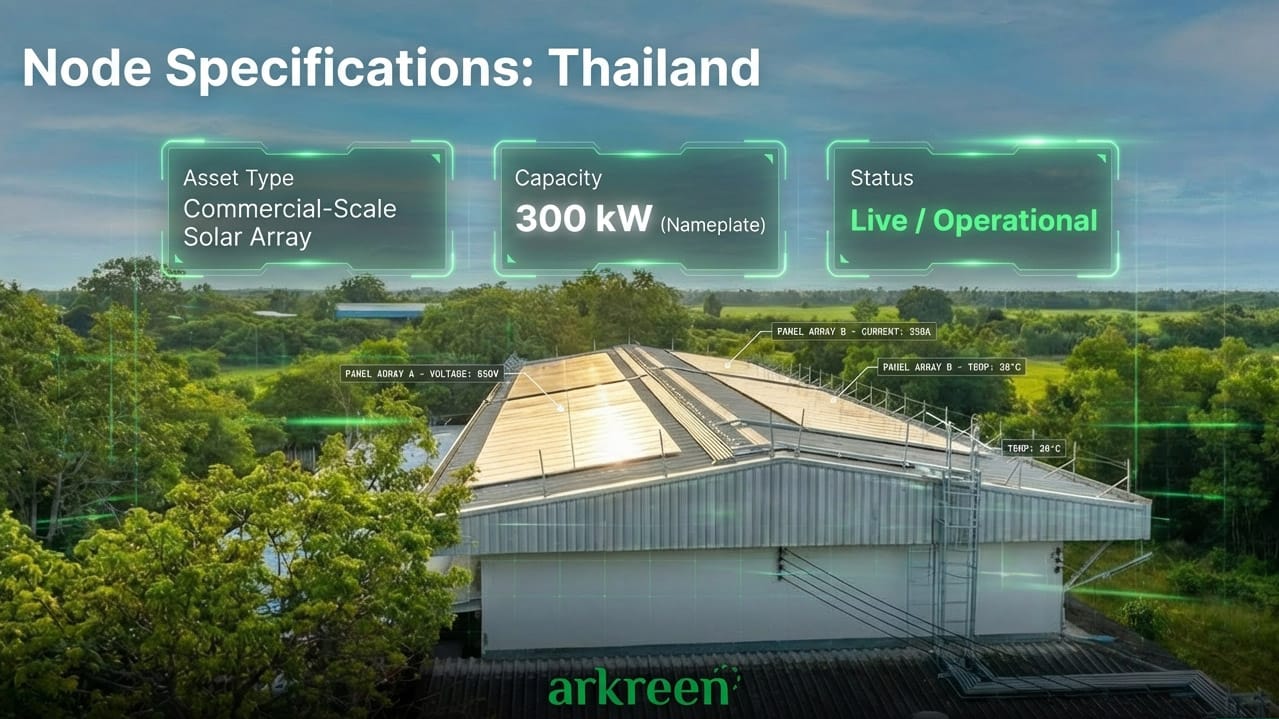
Asset type: Commercial-scale solar array, 300 kW nameplate capacity.
Core capabilities: High-fidelity metering feeding on‑chain settlement; automated stablecoin distributions tied to verified kWh; AKRE capture for network services and governance.
These are not marketing checkboxes. Each capability was engineered to remove common points of failure in RWA tokenization: measurement ambiguity, settlement lag, and misaligned token utility.
New angle - operational proof as a product feature
Most tokenized RWA narratives sell yield, then retrofit operations. Power Yield treats operations as the product. The Thailand node reframes the value proposition: predictable, auditable cash flows are a baseline, network utility is the differentiator. In practice this means:
- Metering as a trust layer. On‑chain metering converts physical kWh into a cryptographic record, reducing reconciliation friction and enabling near real-time distributions.
- Stablecoin settlement as a liquidity primitive. Fiat‑backed distributions remove FX and settlement uncertainty for institutional allocators, while preserving token upside.
- Token utility that matters. AKRE is not a speculative appendage. It is the access key for data services, REC issuance, and virtual power capabilities that the node provides to the network.
This operational-first framing changes how investors underwrite the asset. They now buy into a repeatable engineering process, not a one-off financial structure.
Early lessons and pragmatic adjustments
Field deployments teach faster than whiteboards. From the Thailand node we learned three things that will shape subsequent rollouts:
- Telemetry granularity matters. Sub‑minute metering dramatically reduces settlement variance.
- Local partnerships accelerate compliance. Working with regional operators and legal counsel early shortens REC and interconnection timelines.
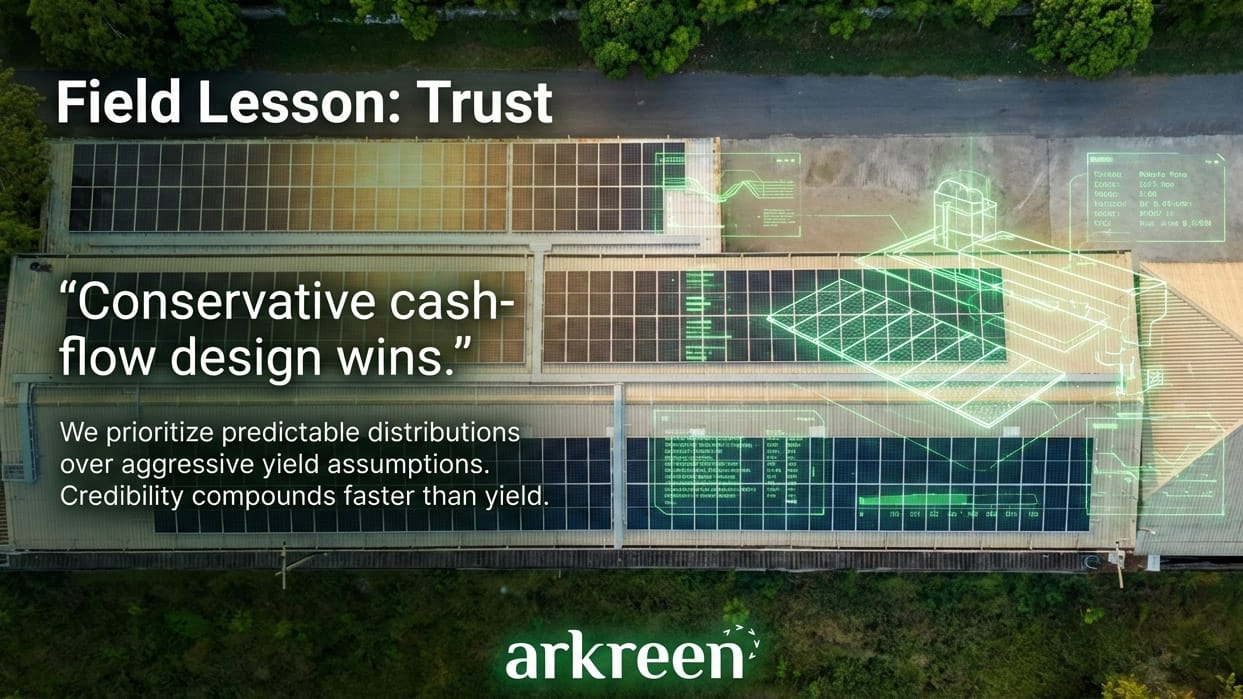
- Conservative cash-flow design wins trust. We prioritized predictable distributions over aggressive yield assumptions, because credibility compounds faster than yield.
These are engineering and commercial choices, not compromises. They make the product investable at scale.
What this means for capital allocators and partners
For institutional allocators, the Thailand node is a working proof that Power Yield can deliver auditable, recurring cash flows while embedding assets into a growing DePIN. For strategic partners, it demonstrates how a physical asset can be both a revenue generator and a protocol participant, contributing data, dispatch capability, and REC issuance to the Arkreen network.
If you evaluate RWAs by operational transparency, regulatory readiness, and token-aligned utility, this deployment materially de-risks the thesis.
Next steps and scale path
We will replicate the Thailand blueprint across Southeast Asia and into the world, prioritizing sites where integration and frameworks are mature. Each new node will incorporate incremental improvements from the field, and every deployment will be instrumented to feed the on‑chain ledger and Arkreen dashboards.
Expect more deployments, each one more capital efficient than the last, because the product is now a repeatable engineering process.
The time to engage is now!
Power Yield has moved from announcement to execution. The Thailand node is the first public demonstration of what we promised: real electricity, verifiable settlement, and token utility that scales. For institutional partners, foundations, and strategic investors interested in pilot co-investments, technical integrations, or node sponsorships, Arkreen is open for conversations.