From Distributed Solar to On-Chain Native Energy Assets: Arkreen’s Business Model and Flywheel

How We’re Building Arkreen’s Next Chapter
When we started Arkreen, we weren’t trying to build another energy company.
We were trying to answer a simpler—but deeper—question:
Why is it still so hard for renewable energy to circulate, settle, and be monetized globally, in a world where capital and information already move at internet speed?
Energy, especially distributed renewable energy, is everywhere.
But economically, it’s still trapped—by geography, by regulation, by fragmented markets, and by outdated settlement systems.
Arkreen exists to change that.
Our Core Belief
We believe distributed renewable energy should be able to:
- Be consumed globally
- Be monetized permissionlessly
- Settle natively on-chain
- And be owned, financed, and shared by communities—not just institutions
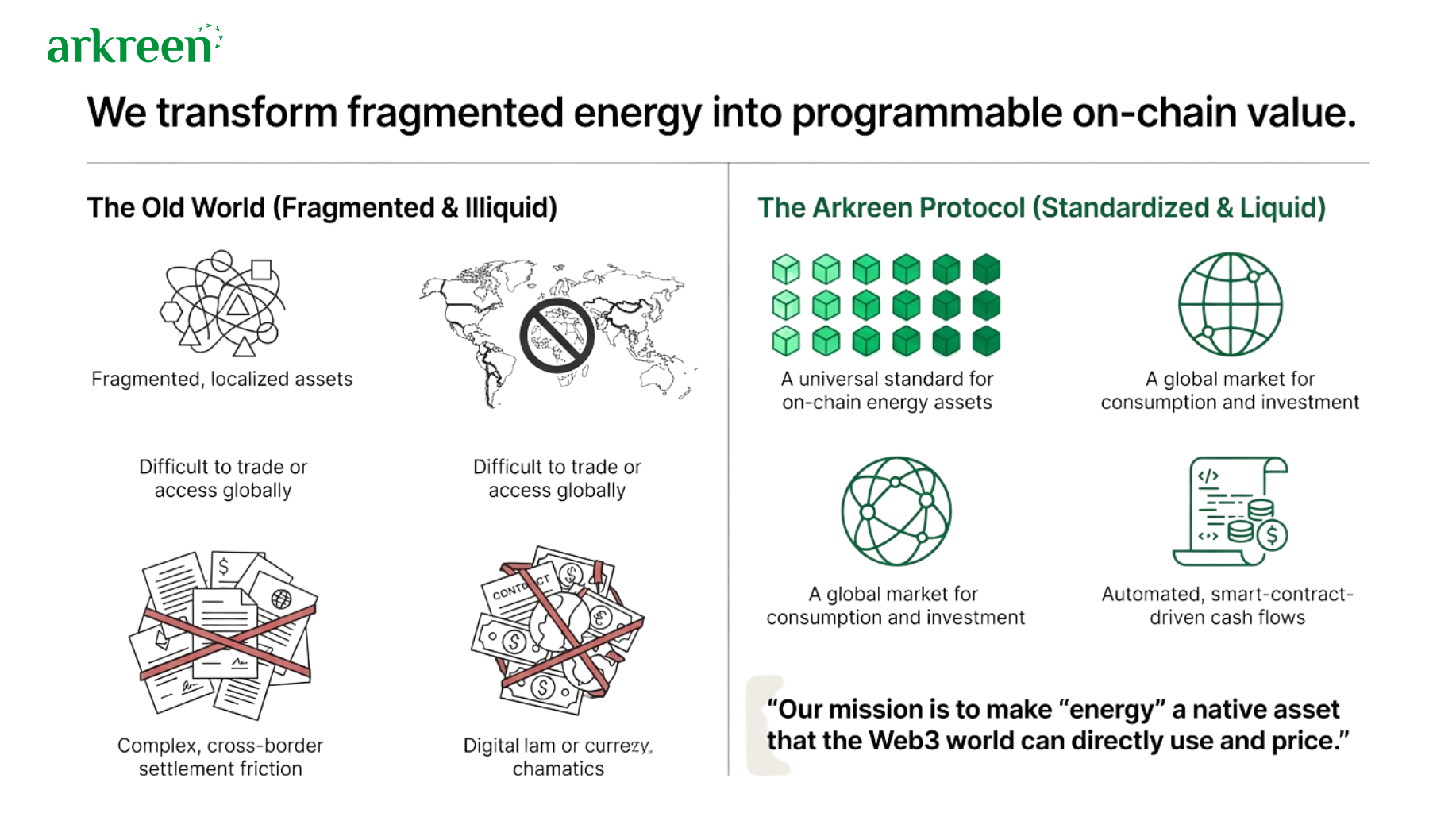
To do that, we focus on one thing:
Turning real-world renewable energy into on-chain native assets and cash flows.
Not abstractions. Not narratives.
Real electricity, real usage, real value—settled by code.
Phase One: Start with What Scales — Green Attributes
Over the past two years, we deliberately started with the most scalable and globally interoperable part of renewable energy: environmental attributes.
Residential solar is already widely deployed, but its green value is often:
- Underutilized
- Difficult to certify across borders
- Impossible for individuals to consume directly
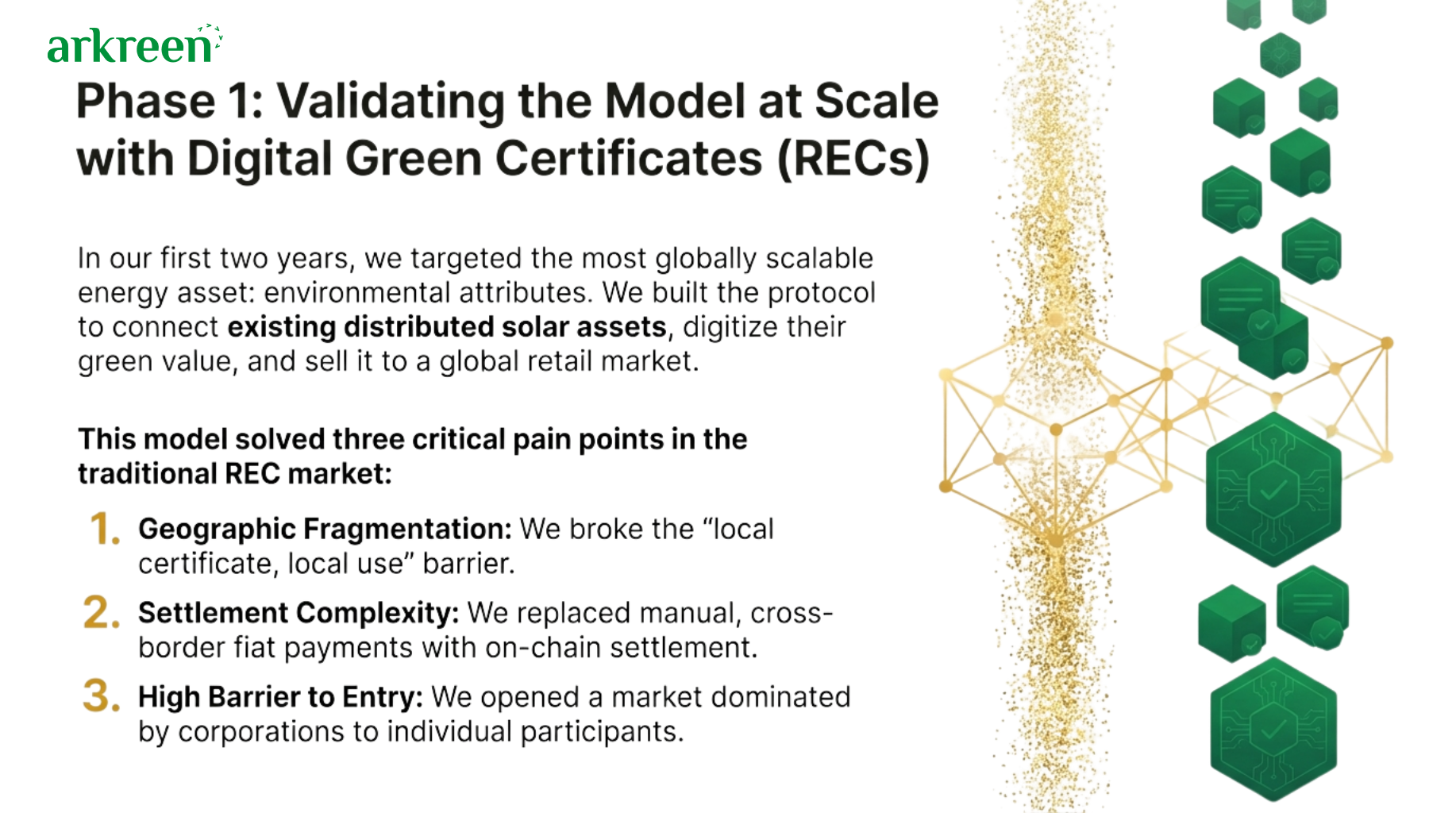
So we built a protocol that:
- Connects existing residential solar systems
- Verifies real generation data
- Converts that data into on-chain digital green certificates
- Enables global, retail-level consumption and settlement
The result surprised even us.
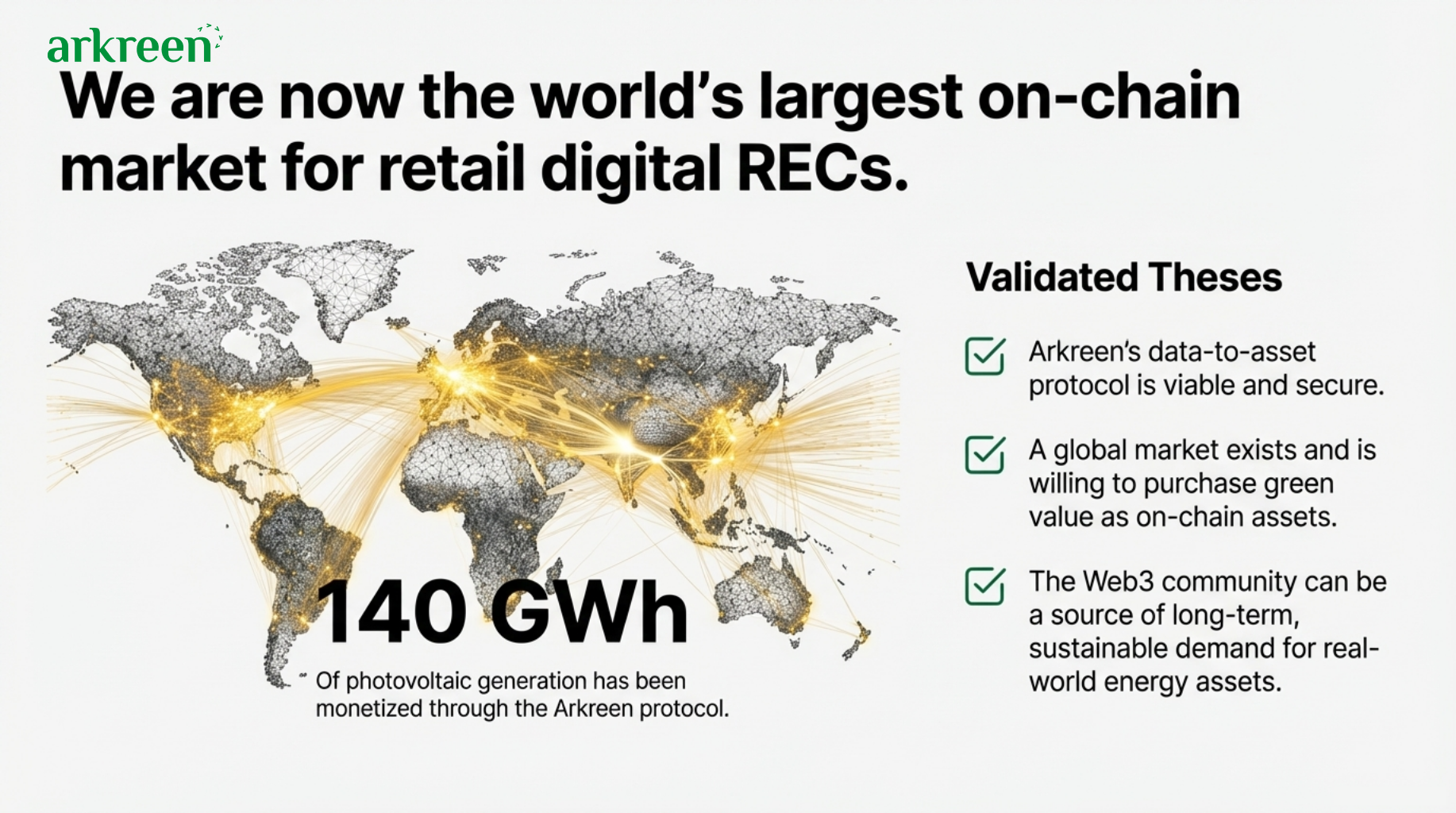
To date, 140 GWh of solar generation has been successfully digitized, consumed, and monetized through Arkreen’s on-chain protocol.
Along the way, Arkreen has become the largest retail on-chain digital green certificate marketplace globally.
But the most important outcome wasn’t the number.
It was the proof.
Proof that:
- Real-world energy data can live on-chain
- Global users will consume green value natively
- Web3 communities can create real demand for renewable energy
That validation gave us confidence to move forward.
Phase Two: Moving Beyond “Green” to Electricity Itself
This year, we entered a more ambitious phase.
Green attributes were just the beginning.
The real question we’re now tackling is:
What if electricity itself—not just its environmental label—could be consumed and monetized permissionlessly on-chain?
This is harder.
But it’s also where the real leverage is.
We’re exploring this through three parallel directions.
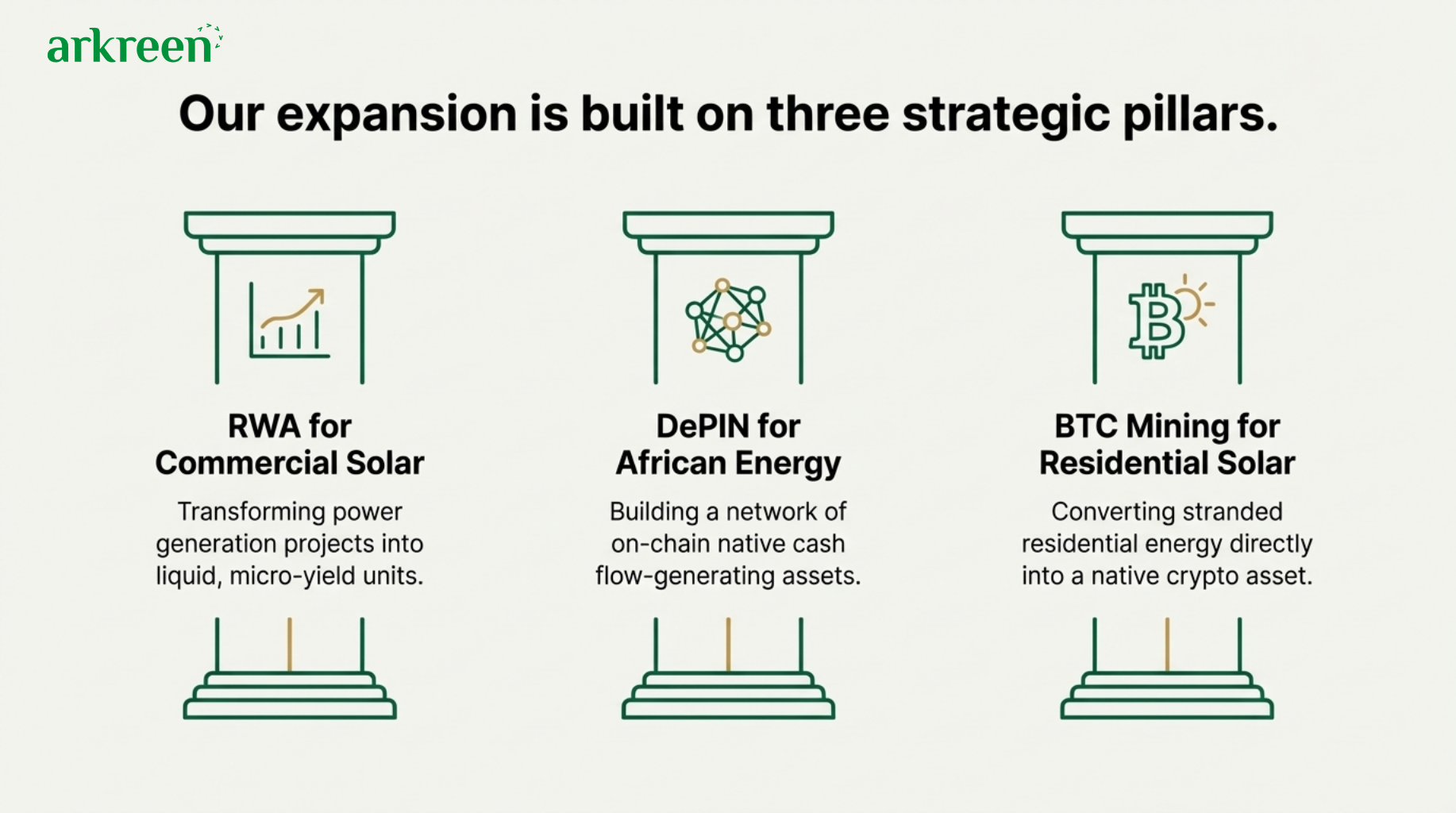
Direction One: Commercial Solar as Real World Assets (RWA)

Large commercial and industrial solar plants are productive—but capital-intensive and structurally rigid.
We’re working with partners to:
- Tokenize solar generation revenue using Arkreen’s on-chain protocol
- Package future electricity revenue into standardized on-chain units
- Use 100W installed capacity as a composable building block
This allows:
- Energy projects to access global liquidity
- Web3 participants to hold real, yield-generating energy assets
- Capital to flow more efficiently into renewable infrastructure
At a high level, we’re breaking large solar plants into globally ownable micro energy assets.
Direction Two: eCandle in Africa — Energy DePIN with Native Cash Flow
This is the direction closest to our hearts.
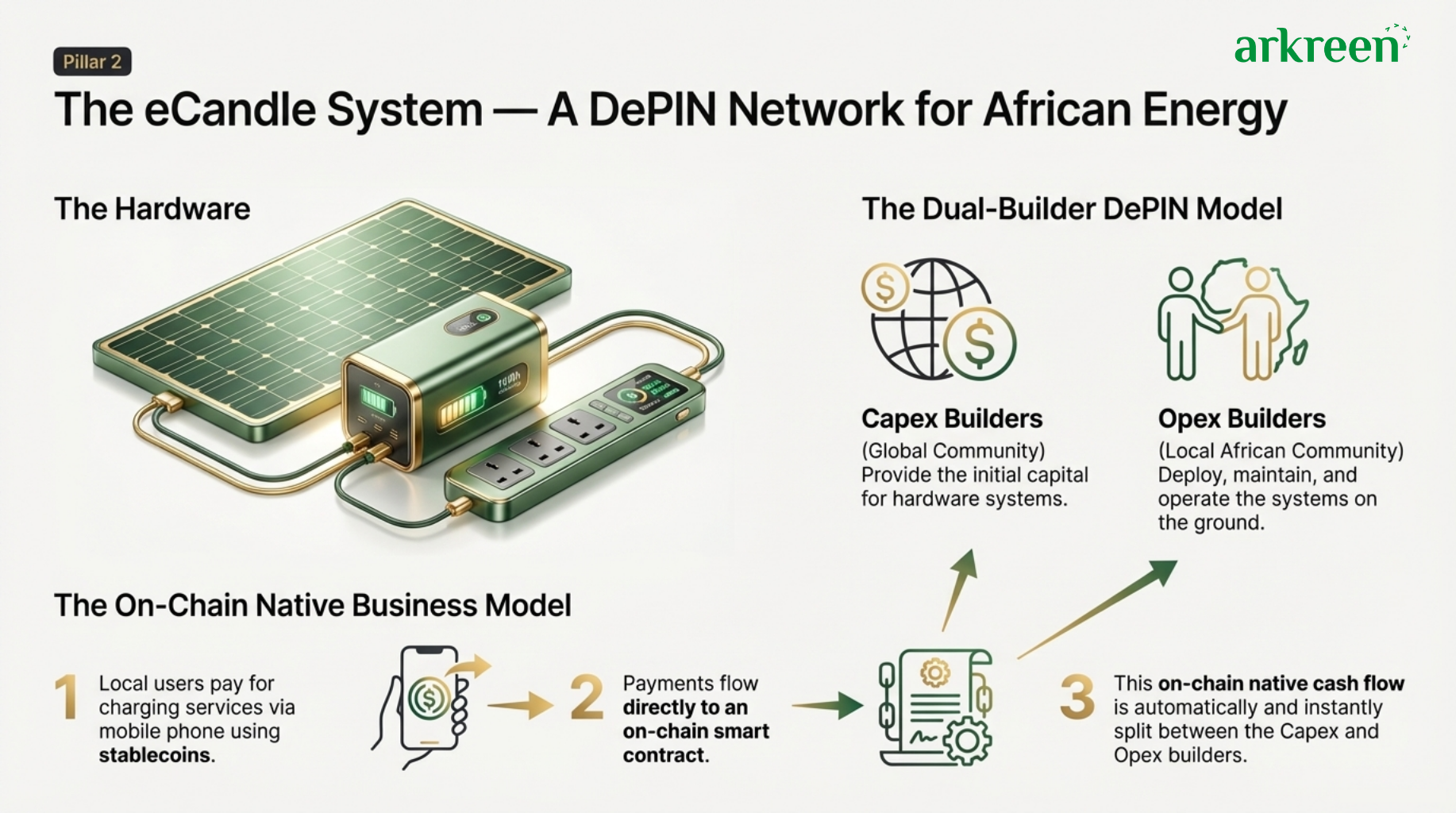
In many African communities, access to electricity is still limited—not because energy is impossible, but because infrastructure and financing are.
We designed eCandle, a small solar storage unit:
- 200W solar panel
- 1 kWh battery
- Smart, metered power output
But hardware is only half the story.
The real innovation is the model:
- Capex Builders from the global community fund the hardware
- Opex Builders from local communities deploy and maintain it
- End users pay small amounts of stablecoins via mobile phones to access charging services
Those payments:
- Flow directly into on-chain smart contracts
- Become native on-chain cash flows
- Are automatically distributed to all Builders in real time
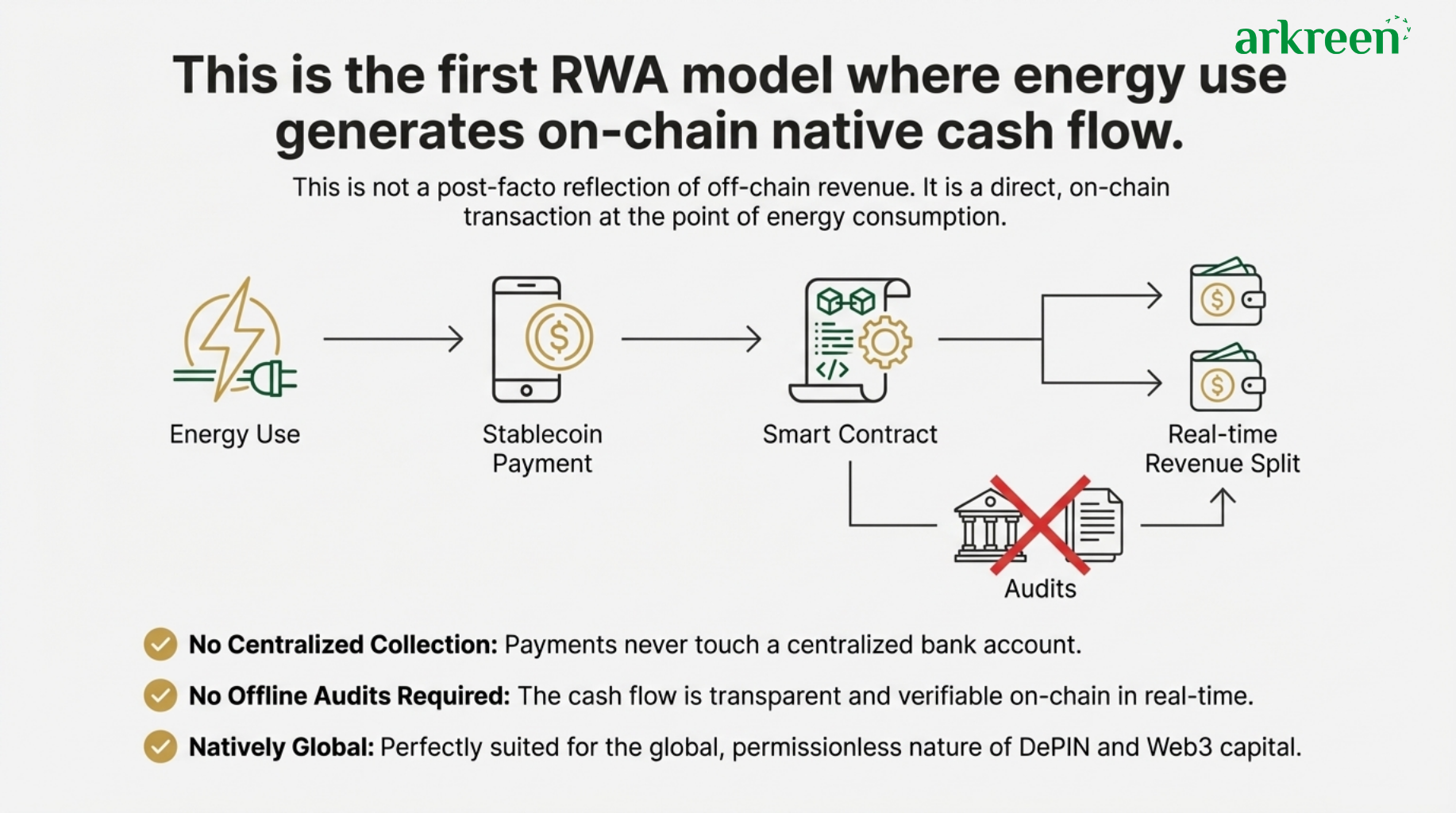
No centralized billing.
No off-chain accounting.
No manual reconciliation.
This is energy infrastructure that settles itself.
For us, this is what DePIN is really about.
Direction Three: Residential Solar Surplus + Bitcoin Mining
The third direction connects energy directly with the most battle-tested on-chain asset: Bitcoin.
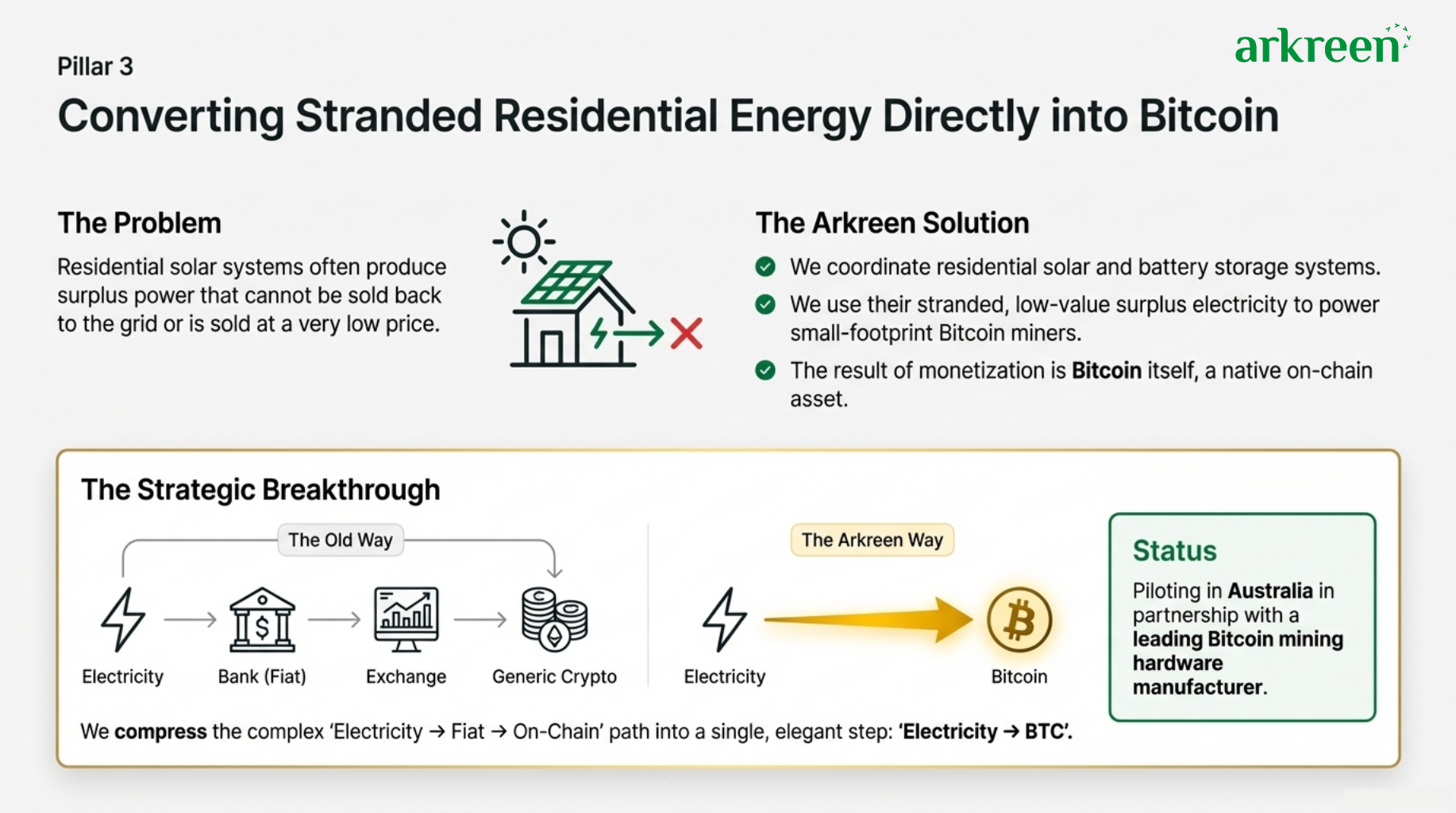
Residential solar systems often generate surplus electricity that:
- Can’t be fed back to the grid efficiently
- Is sold at near-zero prices
- Or is it simply wasted
We’re building a protocol to:
- Coordinate household solar + storage systems
- Dispatch surplus electricity
- Power small-scale Bitcoin mining devices
The output is simple and elegant:
Electricity becomes Bitcoin.
No fiat detours.
No custodial intermediaries.
Just energy transformed into a native on-chain asset.
We’ll begin pilots in Australia, working with leading Bitcoin mining hardware partners.
The Bigger Picture: An Energy Flywheel
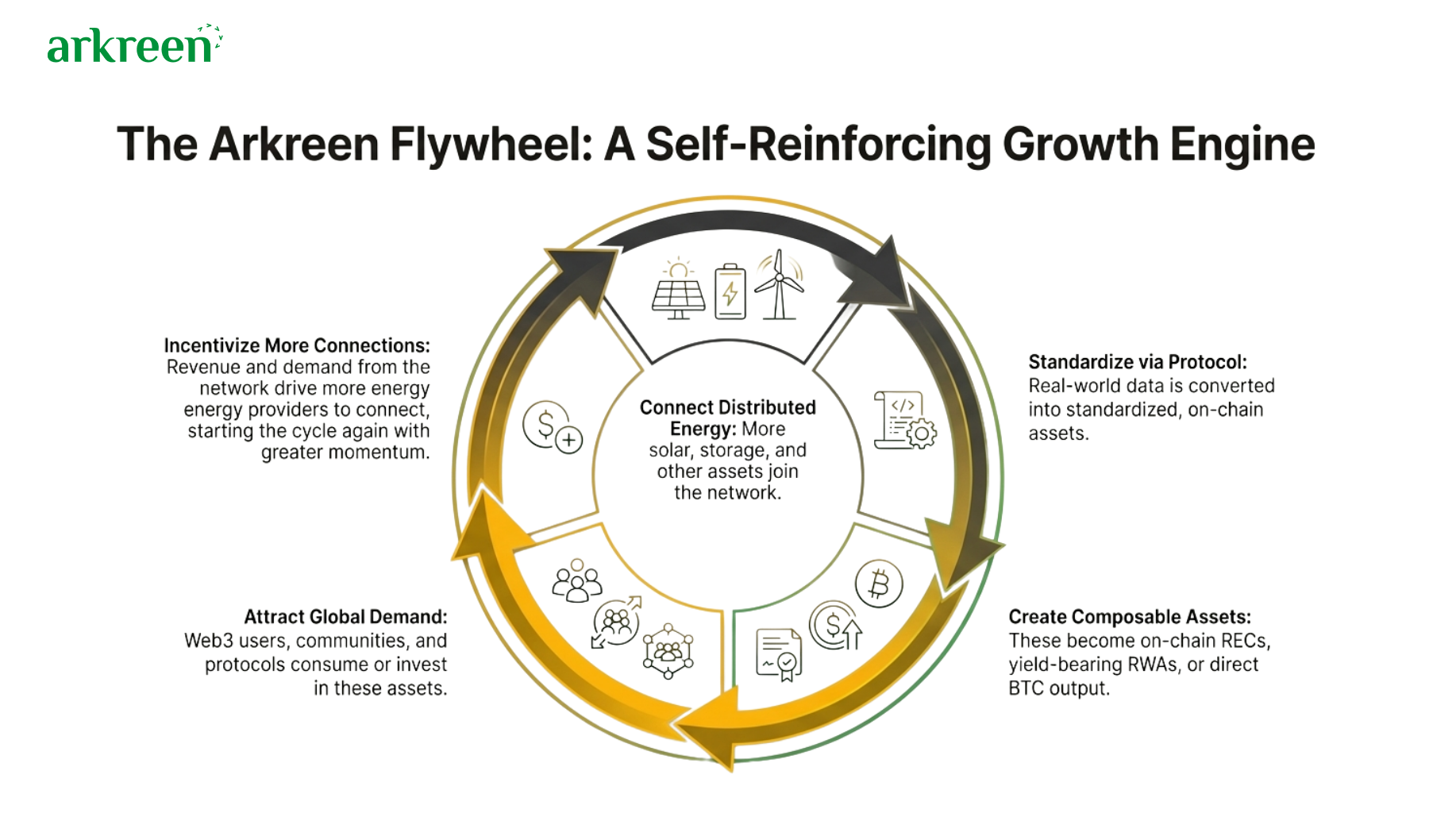
Stepping back, everything we’re building connects into a single flywheel:
Distributed energy data
→ On-chain protocols
→ Consumable energy assets
→ Global demand
→ More energy connected
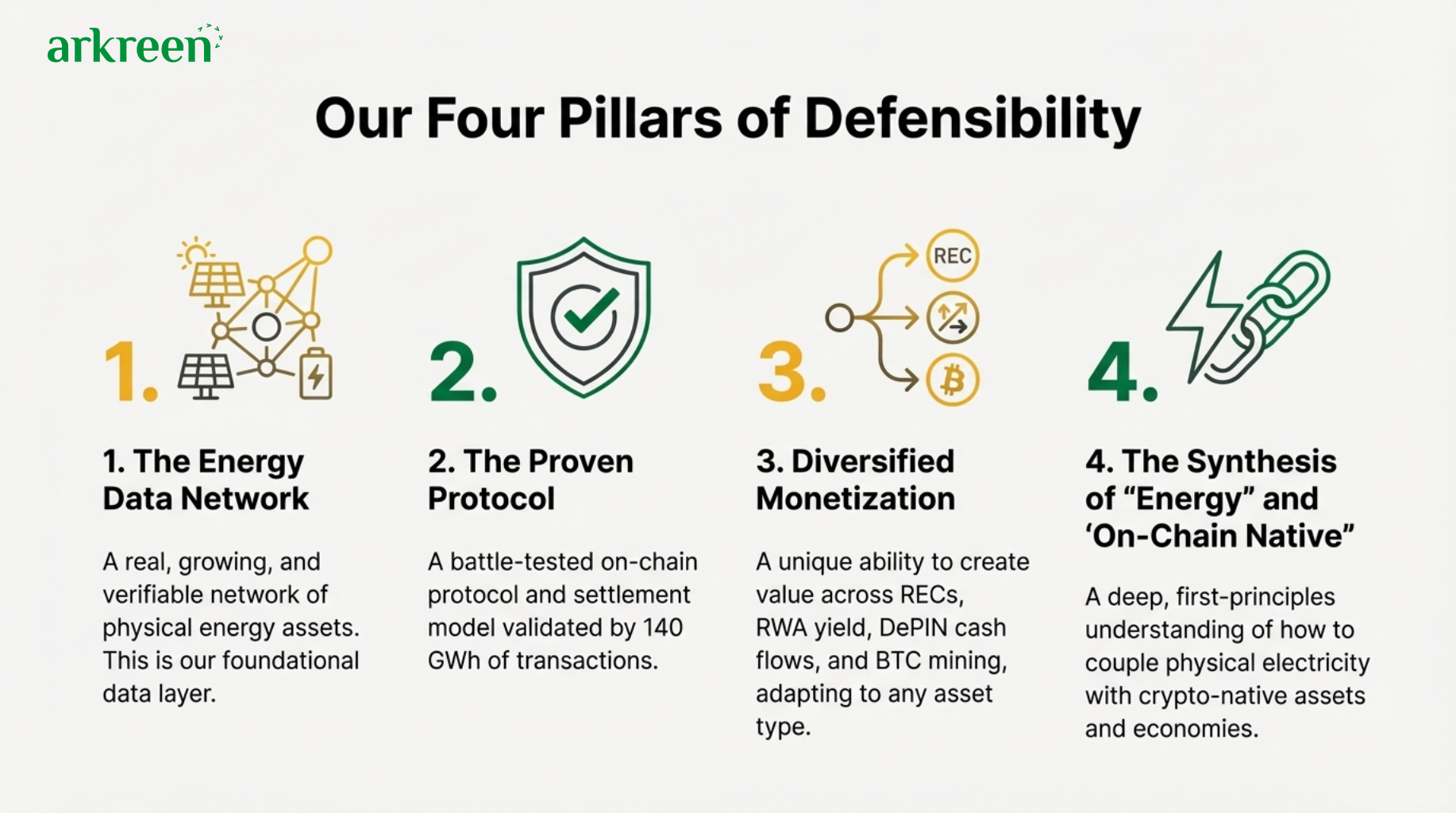
Our long-term moat isn’t any single product. It’s:
- A growing network of real energy data
- Proven on-chain settlement and revenue logic
- Multiple paths to monetize electricity itself
- And a deep belief that energy deserves a native place in Web3
Closing Thought
We don’t think the future energy system will be purely centralized—or purely decentralized.
But we are convinced of this:
Wherever energy is distributed, ownership and value flow should be distributed too.
That’s what we’re building at Arkreen.
One solar panel, one smart contract, one kilowatt-hour at a time.