Exploring Feasibility with Arkreen Network: A Small-Scale DIY Test

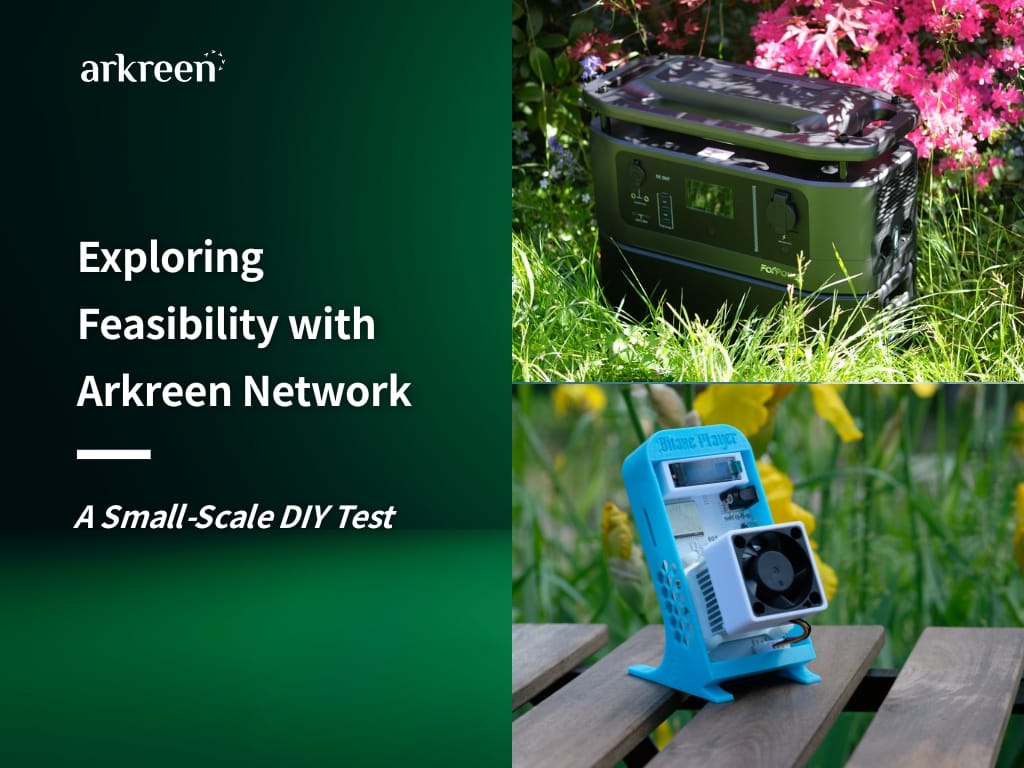
In the pursuit of decentralized energy solutions, Arkreen Network stands at the forefront of innovation, enabling users to harness and optimize renewable energy resources. To explore the feasibility of surplus energy utilization, Merlin conducted a small-scale DIY test in his garden, using solar panels, a high-end battery, and various small scale Bitcoin miners and other hardware to simulate different application situations. The experiment aimed to simulate different energy management scenarios, providing baseline validity checks for larger-scale implementations.
This blog post walks through the hands-on process, observations, and takeaways from Merlin’s test: an experiment driven purely by curiosity and a DIY mindset. Using easy-to-access plug-and-play hardware, he explored different energy management approaches on a small scale, proving that even a solo hobbyist can tinker with decentralized energy concepts without the need for a full research team or high-end infrastructure.
Experiment Setup
The test setup consisted of:
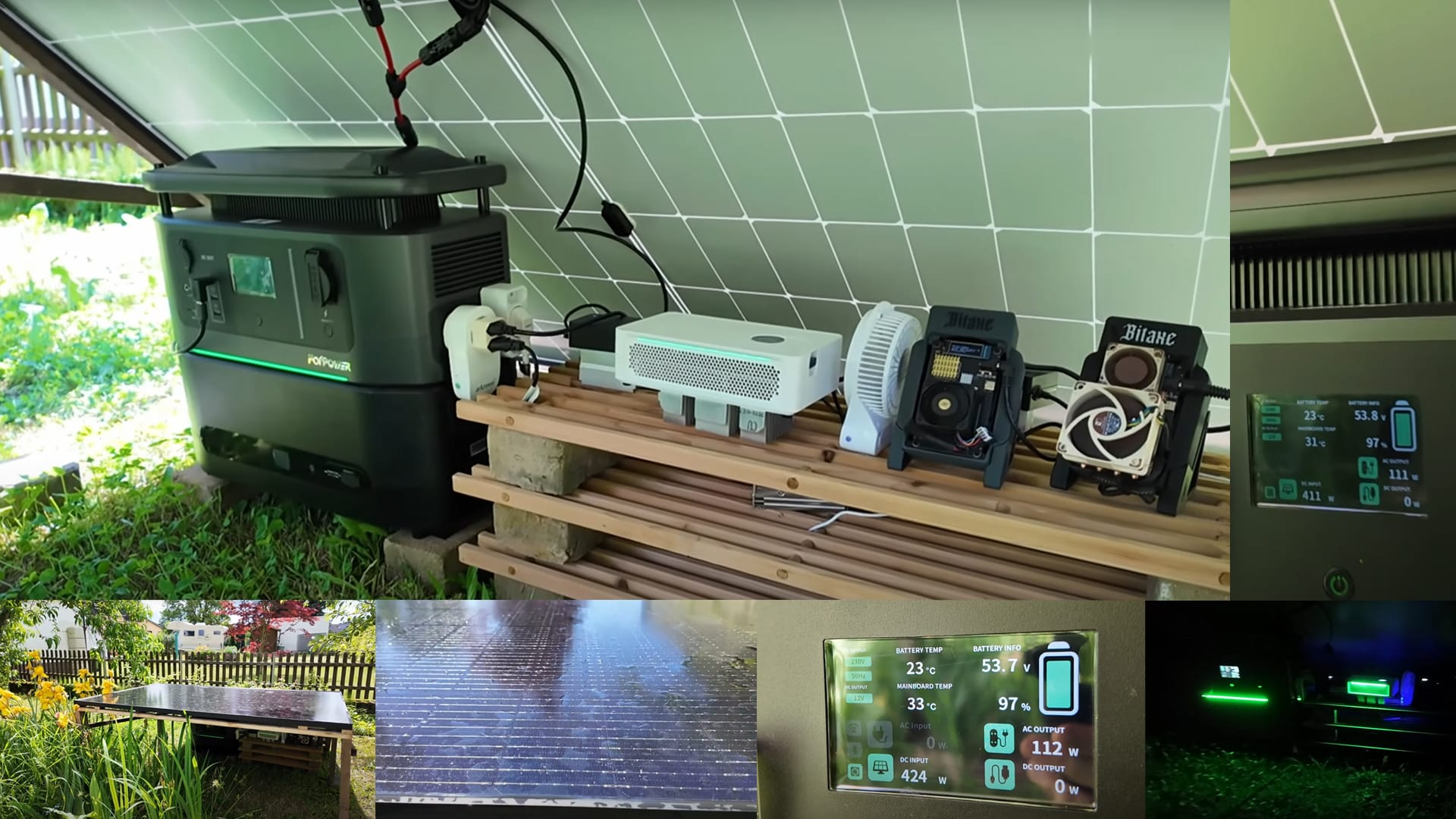
Solar Panels: Two panels providing renewable energy input.
Battery Storage: A high-end small-scale battery for energy buffering.
Bitcoin Miners: Different models used to test various operational scenarios.
Energy Management Software: Used to monitor and optimize energy distribution.
The primary objective was not to create a fully functional off-grid mining operation but rather to assess the feasibility of different energy utilization strategies in a controlled environment.
Test Scenarios
Merlin designed three distinct scenarios to evaluate energy management efficiency:
Continuous 24/7 Mining
In this scenario, the Bitcoin miners operated continuously, drawing power from the solar panels and battery. The goal was to assess whether the system could sustain uninterrupted mining without depleting stored energy.
Findings:
• The battery played a crucial role in maintaining uptime during low solar input periods.
• Extended cloudy conditions led to energy deficits, requiring careful load balancing.
• Continuous mining proved challenging without additional energy sources or larger storage capacity.
• As to be expected, there is a low conversion loss and waste involved in charging and depleting.
• Running DC to DC had benefits towards step conversion over AC.
Excess Energy Utilization
Here, mining was restricted to periods when solar generation exceeded battery storage capacity. Instead of running 24/7, miners only activated when surplus energy was available. Additionally, other consumers were added with low energy usage but requiring 24/7 upkeep.
Findings:
• This approach maximized energy efficiency, ensuring battery reserves remained stable.
• Mining uptime fluctuated based on solar conditions, highlighting the need for predictive energy modeling.
• The system effectively prevented unnecessary battery drain, making it a viable strategy for intermittent mining.
• Given the scale of items used, some data can be extrapolated to a full house scenario with a baseline consumption and excess surplus from Solar.
Smart Load Management
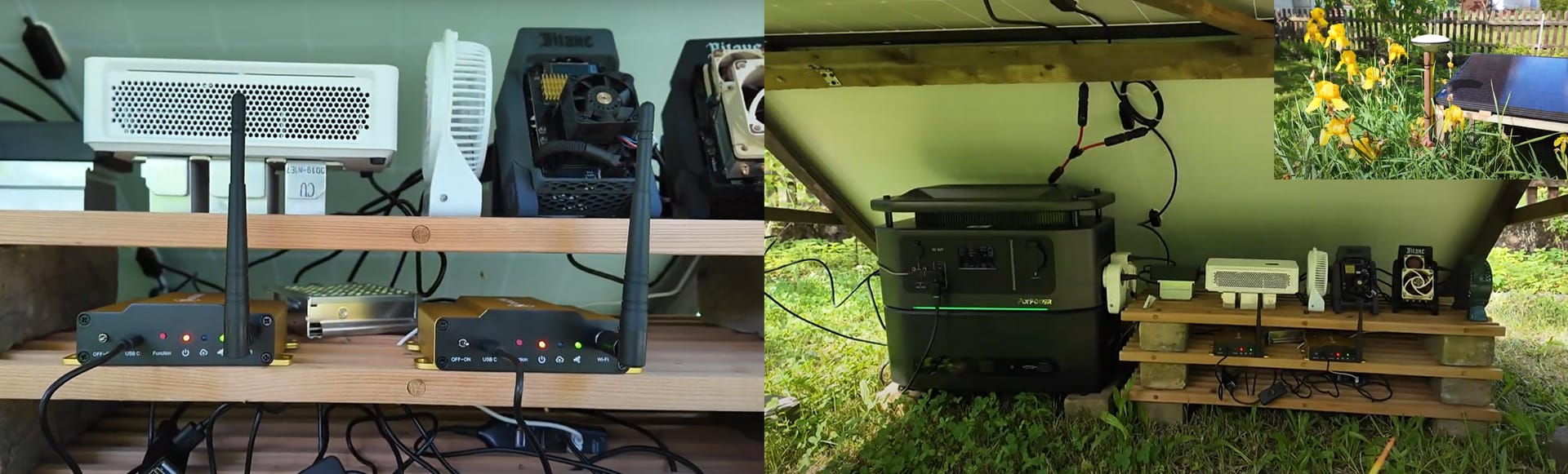
This scenario introduced dynamic energy allocation, where mining operations adjusted based on real-time battery levels and solar input. The system prioritized battery charging first, only diverting excess energy to mining when reserves were sufficient.
Findings:
• Intelligent load management significantly improved system stability.
• Mining operations adapted dynamically, optimizing energy usage without compromising storage.
• Software-driven automation proved essential for maintaining efficiency in decentralized energy setups.
Key Takeaways
Merlin’s experiment provided valuable insights into off-grid energy utilization for decentralized applications:
• Baseline Feasibility: While small-scale, the test validated core principles applicable to larger systems.
• Energy Optimization: Dynamic load management enhances efficiency, preventing unnecessary battery depletion.
• Decentralized Potential: Arkreen Network’s infrastructure can facilitate intelligent energy distribution for off-grid setups based on existing hardware from metering.
Future Implications
Although this test was not designed for direct real-world implementation, it serves as a foundational exploration of decentralized energy management. Scaling such concepts could enable sustainable mining operations, microgrid optimizations, and broader applications within Arkreen Network’s ecosystem.
Merlin’s experiment underscores the importance of intelligent energy allocation, paving the way for future innovations in decentralized energy utilization.
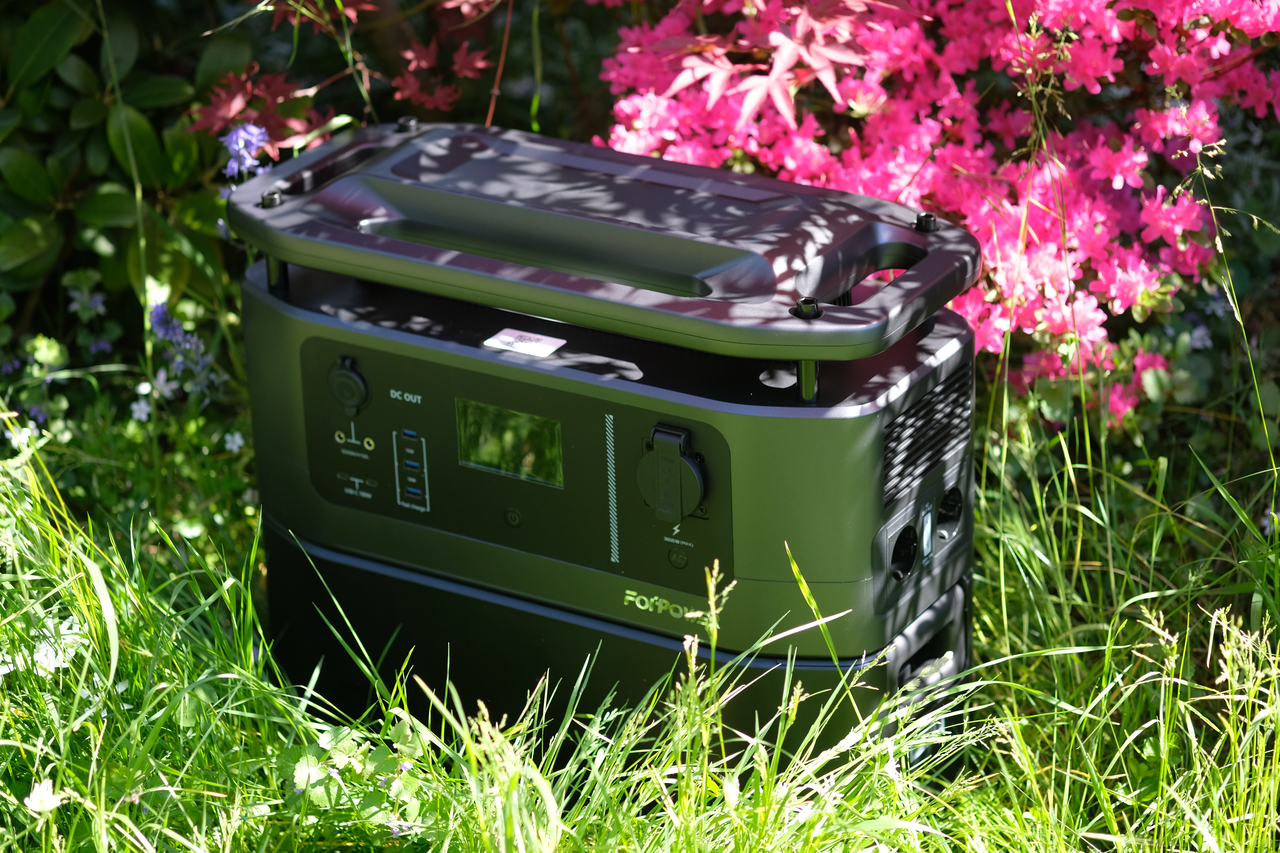
Here a small montage Merlin made of his first 10 day cycle:

At the end of the day, this was never meant to be some groundbreaking revelation, just a fun side project from someone in the team who enjoys experimenting with energy setups. We’re not here to overstate its significance or claim it as a definitive model for off-grid mining. It’s simply one DIY test, driven by curiosity, and shared in the spirit of open exploration. But these kinds of ideas, how energy can be managed, optimized, and used in decentralized ways, are always on our minds. We tinker, we test, and we learn, because that’s how innovation starts.