EnergyFi: Making Energy Cash Flows On-Chain Verifiable Assets

Arkreen’s InfraFi Path: Trustworthy Data Networks × A Financial Coordination Layer
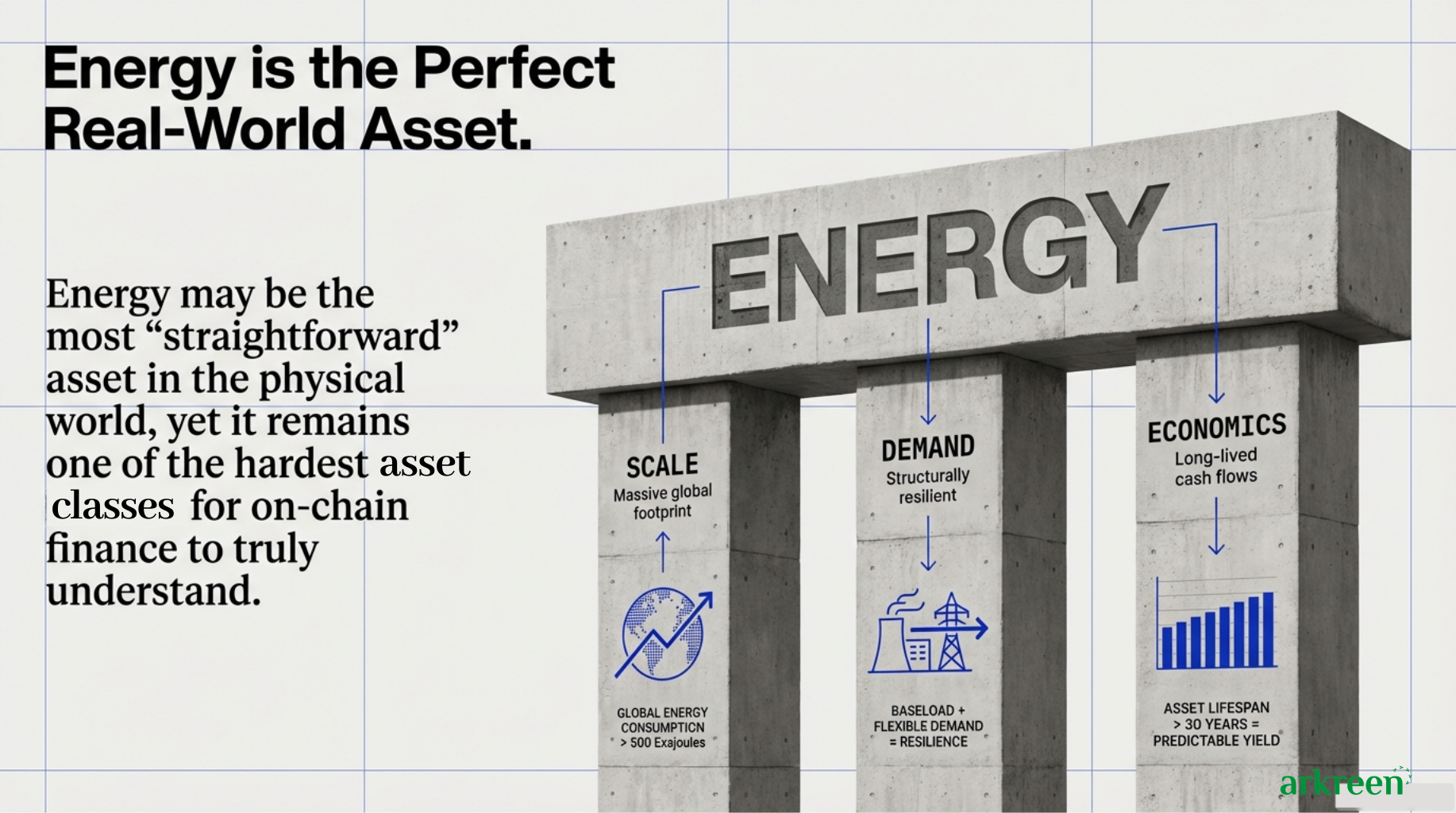
Energy may be one of the most demand straightforward real-world assets: massive in scale, structurally resilient in demand, and backed by long-lived cash flows.
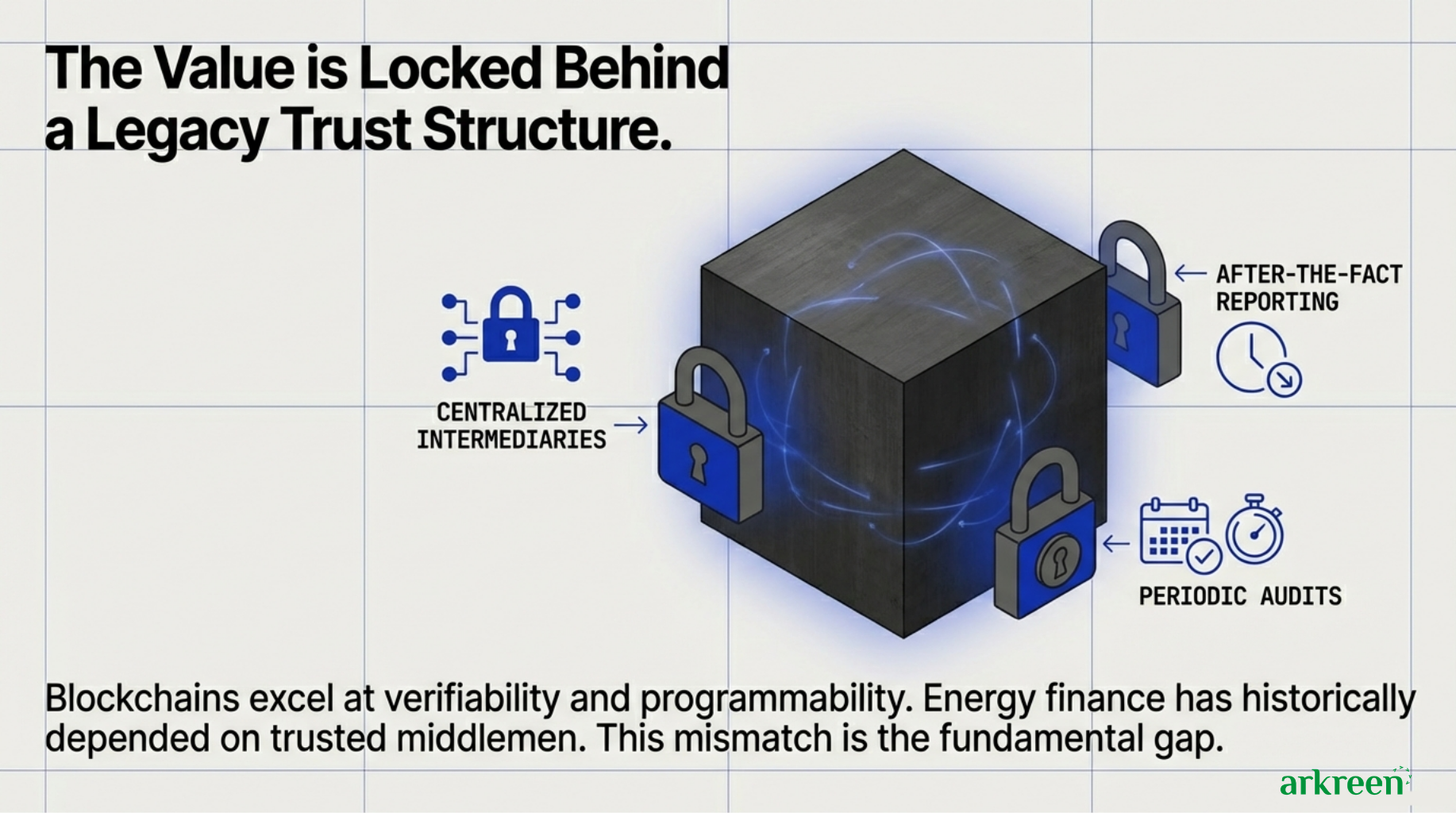
Yet it has also been one of the hardest asset classes for on-chain finance to truly understand—not because energy lacks value, but because that value has long been locked inside a legacy trust structure: centralized intermediaries, after-the-fact reporting, and periodic audits.
In the traditional setup, energy finance follows a familiar route: generation and consumption happen in the physical world; settlement happens within established systems; and financial products are built on top of reports and audit trails.
This works—until you try to bring it natively on-chain. Then a fundamental gap appears:
On-chain systems cannot continuously and independently verify the real-world behaviors that underpin energy cash flows.
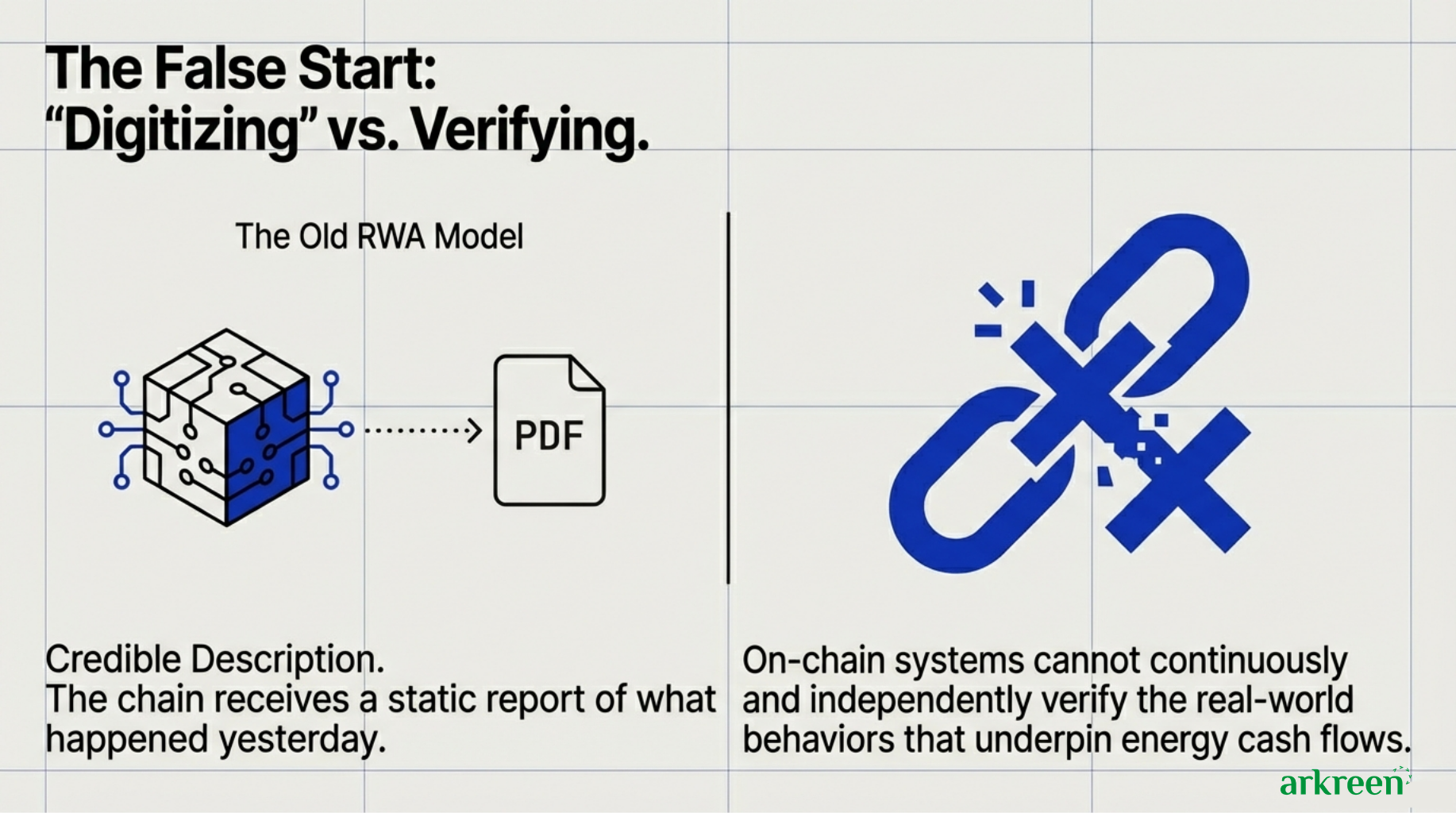
Blockchains excel at verifiability, programmability, and composability. Energy finance has historically depended on trusted middlemen. That mismatch is why many “energy on-chain” attempts stop at structuring and packaging: what the chain receives is a credible description, not a verifiable chain of facts.
EnergyFi is Arkreen’s answer to that gap.
Not “Putting Energy on Chain,” But Turning Energy Flows and Cash Flows Into On-Chain Signals
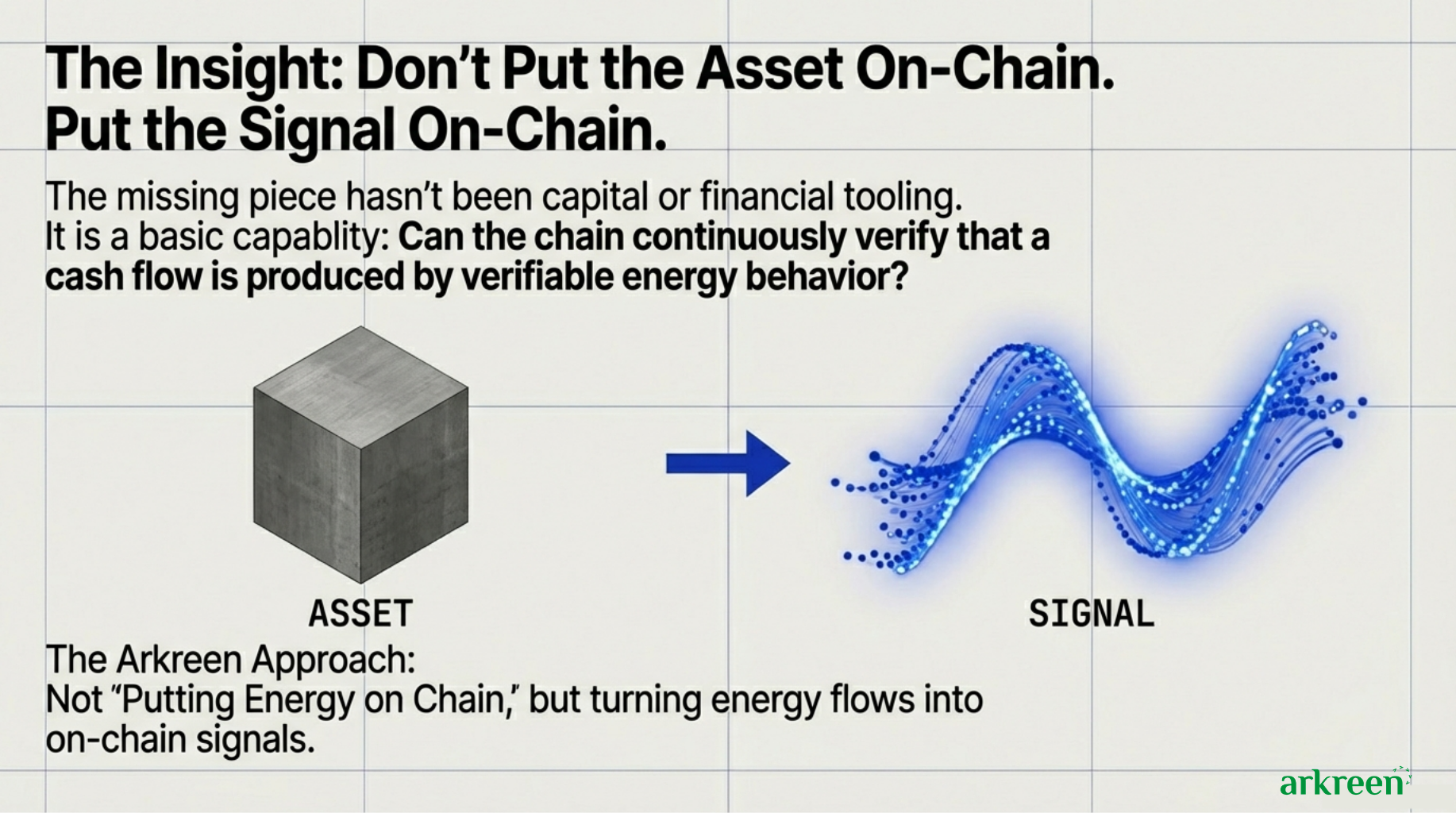
For a long time, the limitation hasn’t been capital or financial tooling on-chain. The missing piece has been a more basic capability:
Can the chain continuously verify that an energy cash flow is truly produced by verifiable energy behavior?
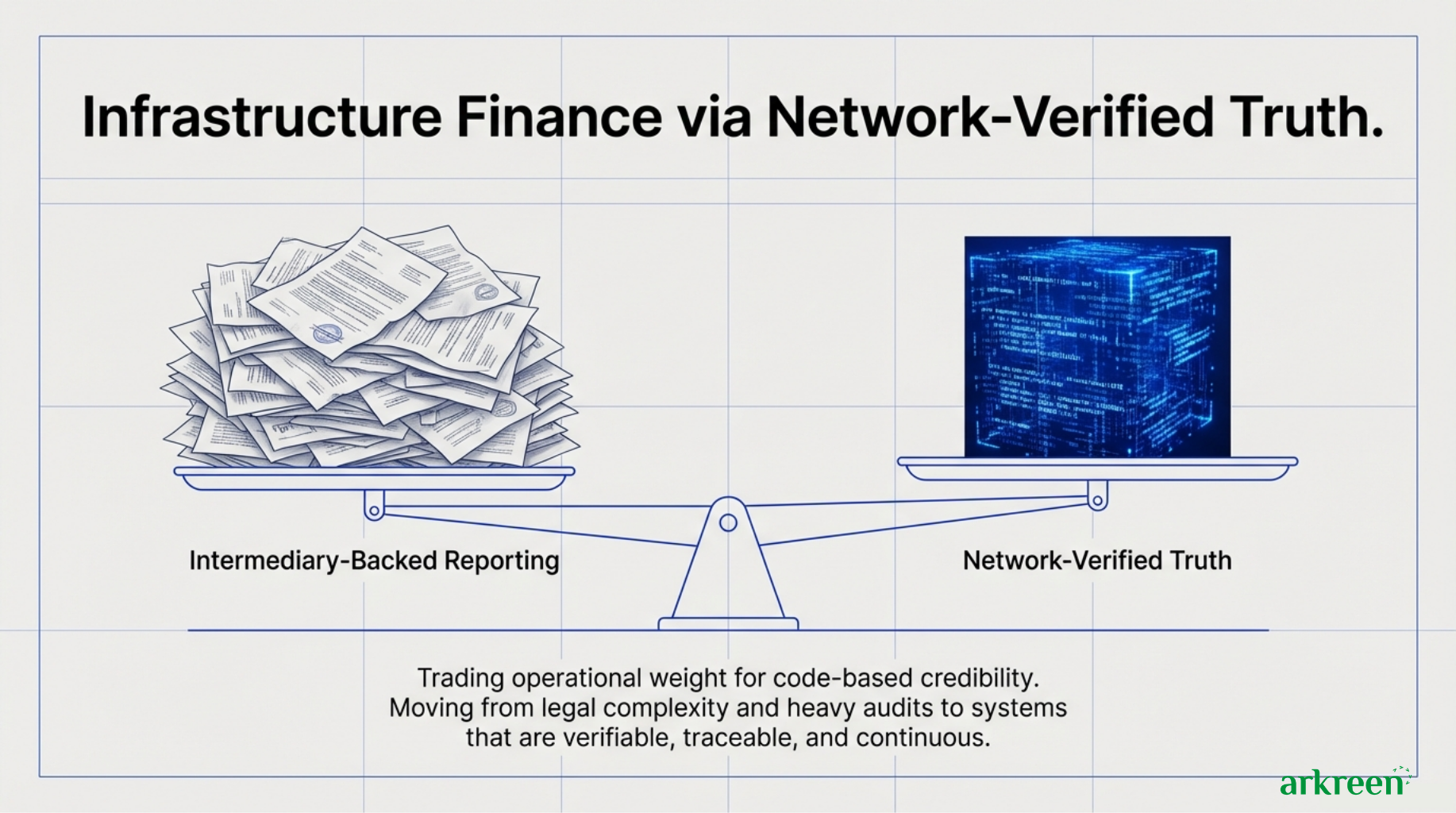
Without that capability, energy assets typically revert to a conventional RWA path: more paperwork, more legal complexity, heavier audits—trading operational weight for perceived credibility.
Arkreen takes the opposite approach:
bring trust back from intermediaries and into the network itself.
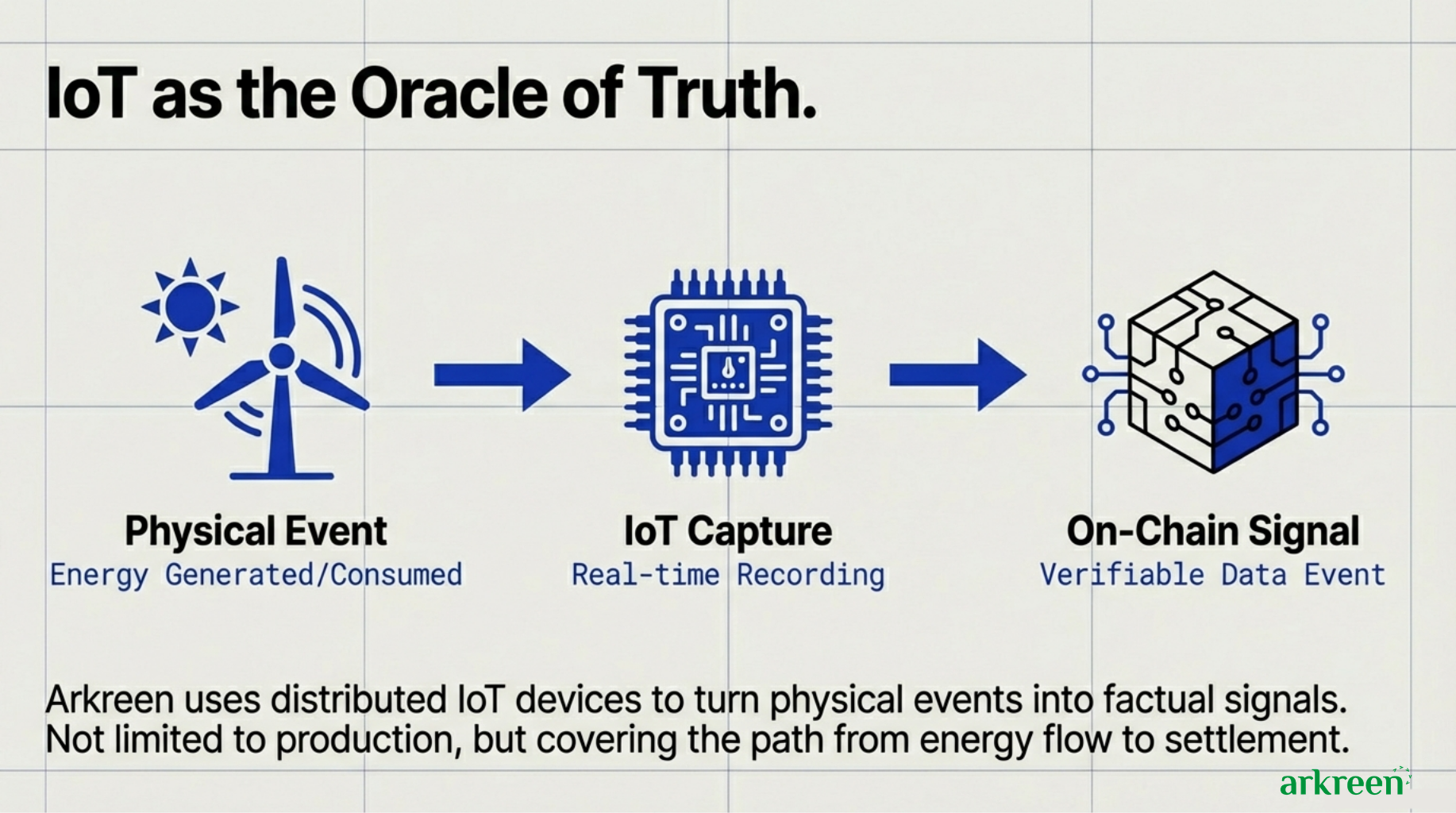
Through a decentralized energy data network, Arkreen uses distributed IoT devices to continuously record key events across the energy system as on-chain verifiable data events—not limited to production alone, but covering critical facts along the path from energy flow to settlement.
As a result, each unit of energy is no longer merely an after-the-fact statement in a report; it becomes a factual signal that programs can directly reference: verifiable, traceable, composable, and continuously updated.
When the key facts behind energy flow and settlement become independently verifiable, energy cash flows gain the prerequisites to become truly usable objects in on-chain finance.
EnergyFi: Financial Infrastructure Built on Trustworthy Energy Data
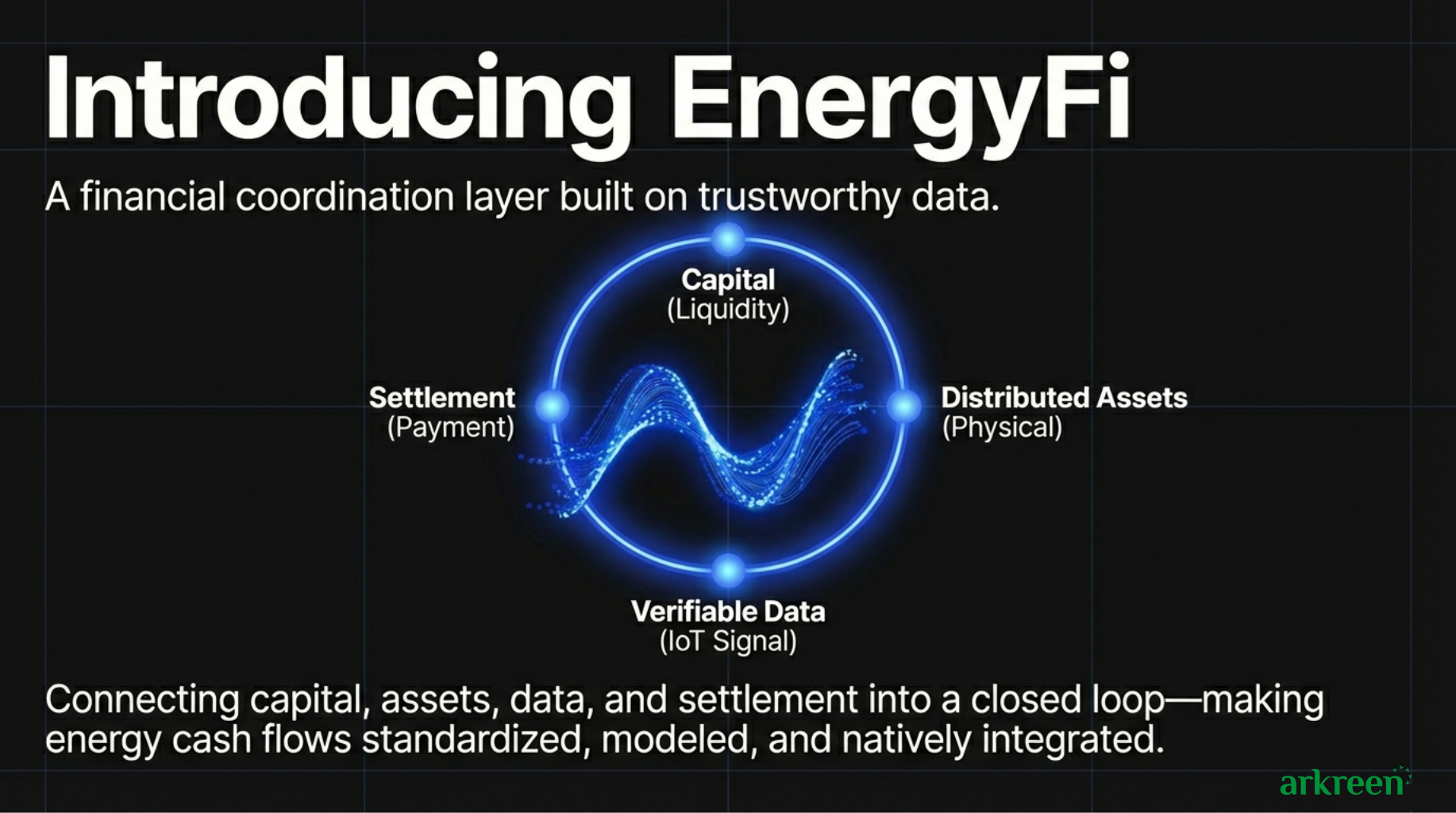
On this new foundation, Arkreen introduces EnergyFi: a financial infrastructure layer built on trustworthy energy data, designed to make distributed energy cash flows natively compatible with what on-chain finance requires:
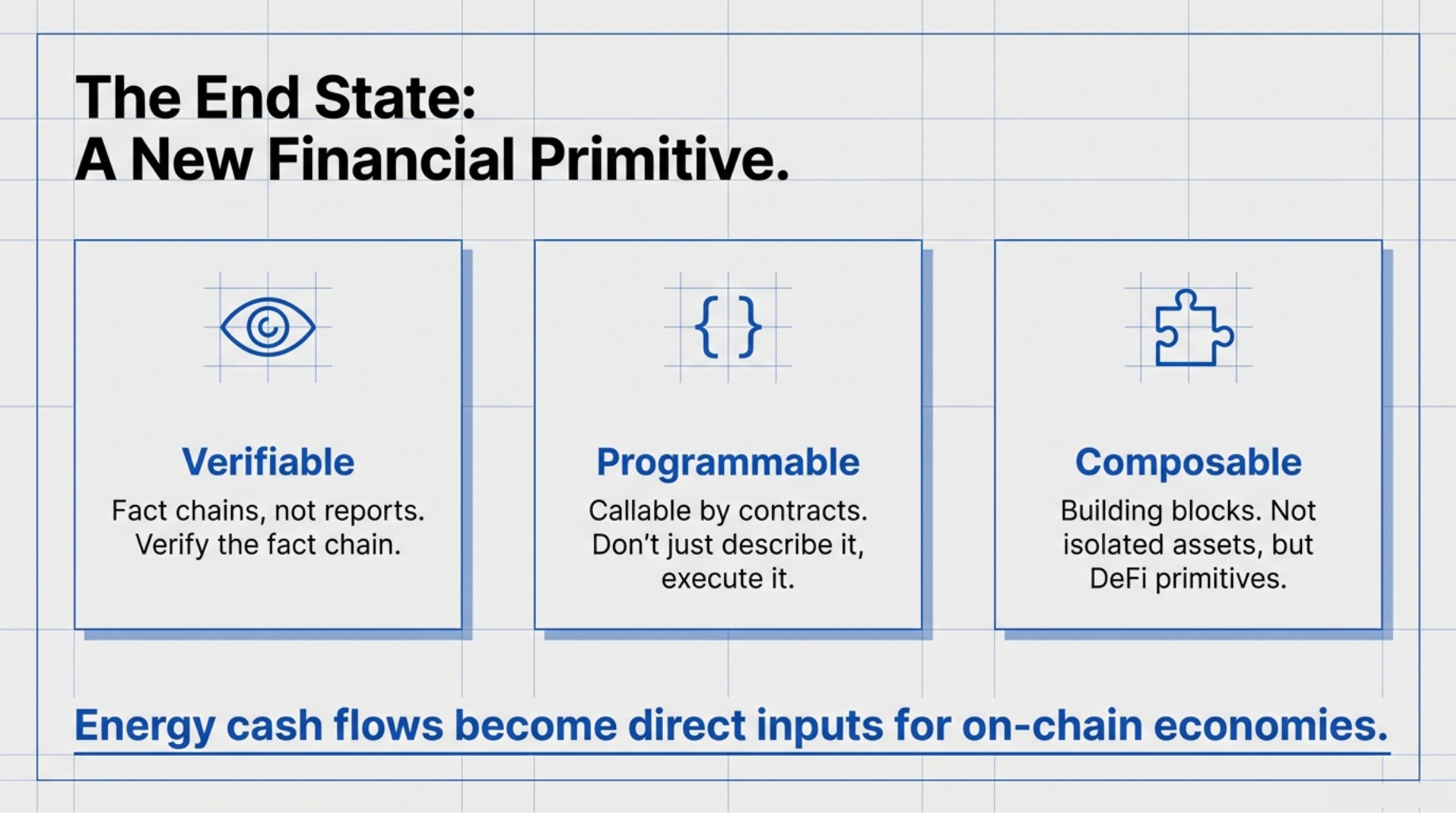
- Verifiability — not “trust the report,” but “verify the fact chain”
- Programmability — not “describe the cash flow,” but “make it callable by contracts”
- Composability — not “isolated assets,” but “building blocks for on-chain finance”
You can think of EnergyFi as a financial coordination layer for energy networks: it connects capital, distributed energy assets, verifiable data, and settlement mechanisms into a closed loop—so energy cash flows can be standardized, modeled, and integrated into on-chain finance in a native way.
Arkreen × EnergyFi: An Innovation in InfraFi
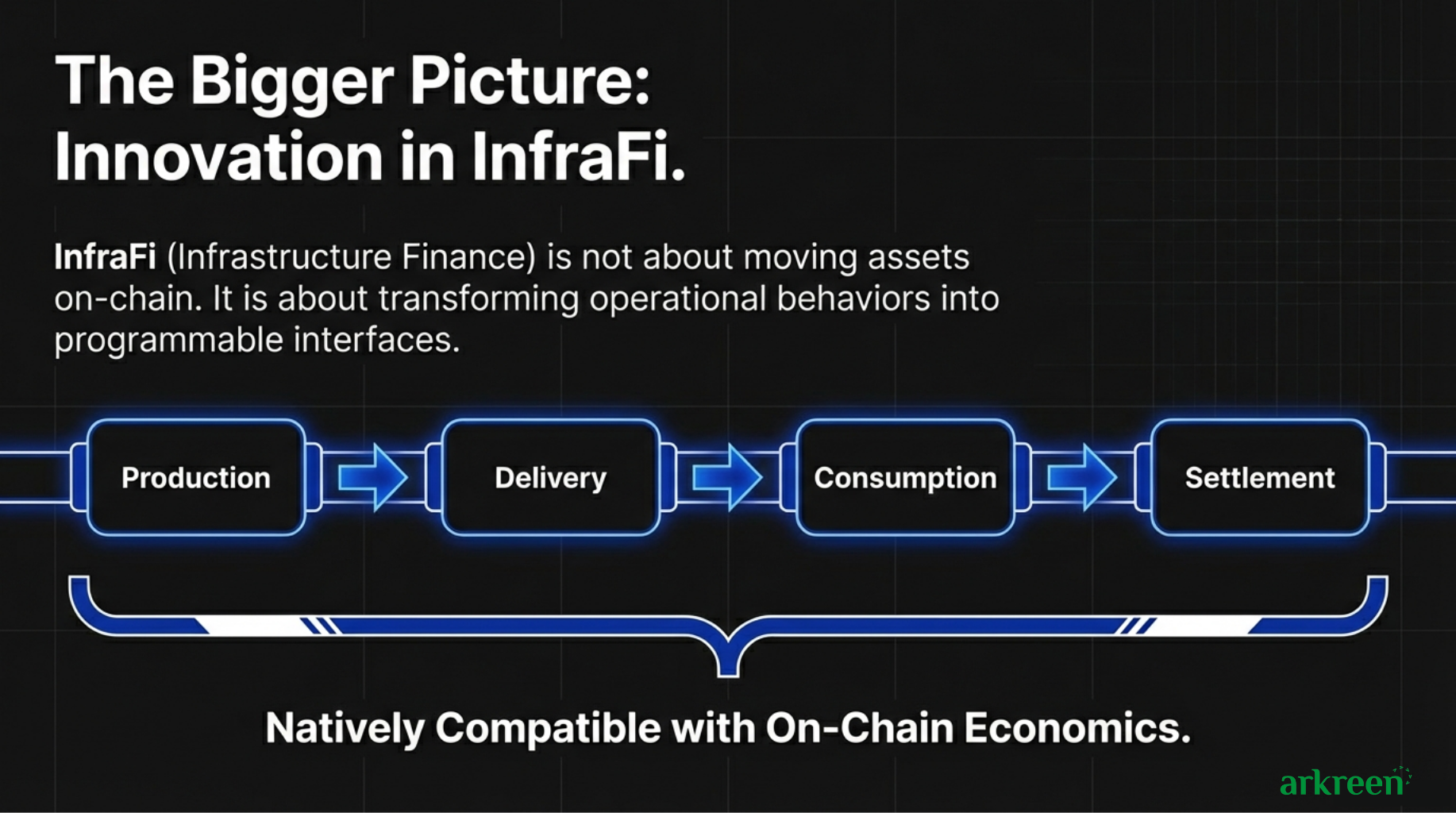
From a broader lens, EnergyFi is also Arkreen’s practical innovation in InfraFi (Infrastructure Finance). InfraFi isn’t about “moving traditional assets onto chain.” It’s about transforming real operational behaviors—production, delivery, consumption, and settlement—into verifiable, programmable interfaces for trust and cash flows.
Arkreen starts by turning the “fact layer” of the energy system into an always-verifiable data infrastructure through a decentralized energy data network. Then, with EnergyFi, Arkreen links those fact signals with capital, asset organization, and settlement into a coherent loop. In other words, Arkreen is moving infrastructure finance from “intermediary-backed reporting” toward “network-verified truth,” enabling infrastructure to become natively compatible with on-chain economic systems.
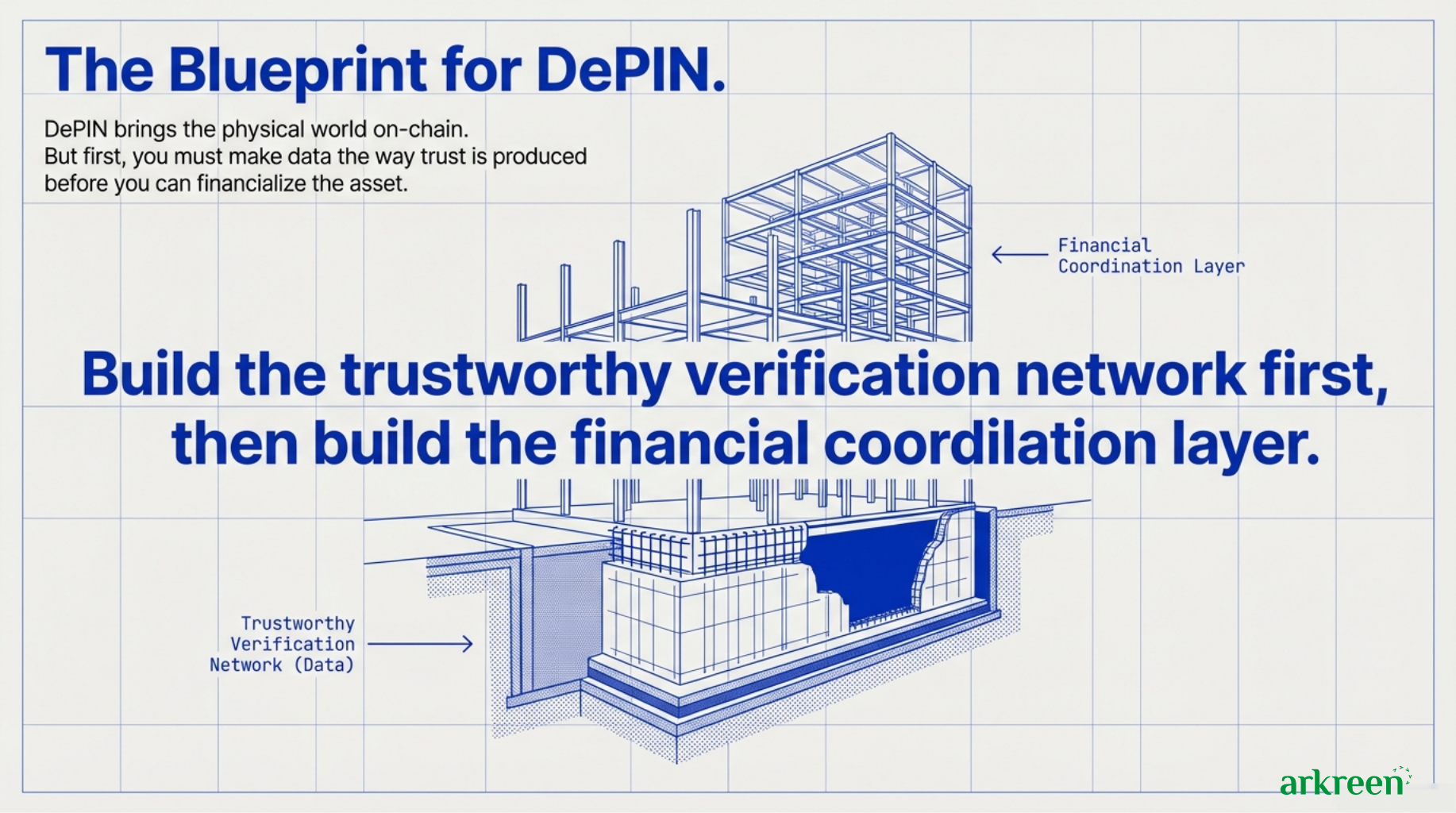
This is not only about energy finance. It also points to a scalable blueprint for InfraFi:
build a trustworthy verification network first, then build a financial coordination layer and standard interfaces on top.
A Key Shift: From Valuation Narratives to a Facts-to-Settlement Loop
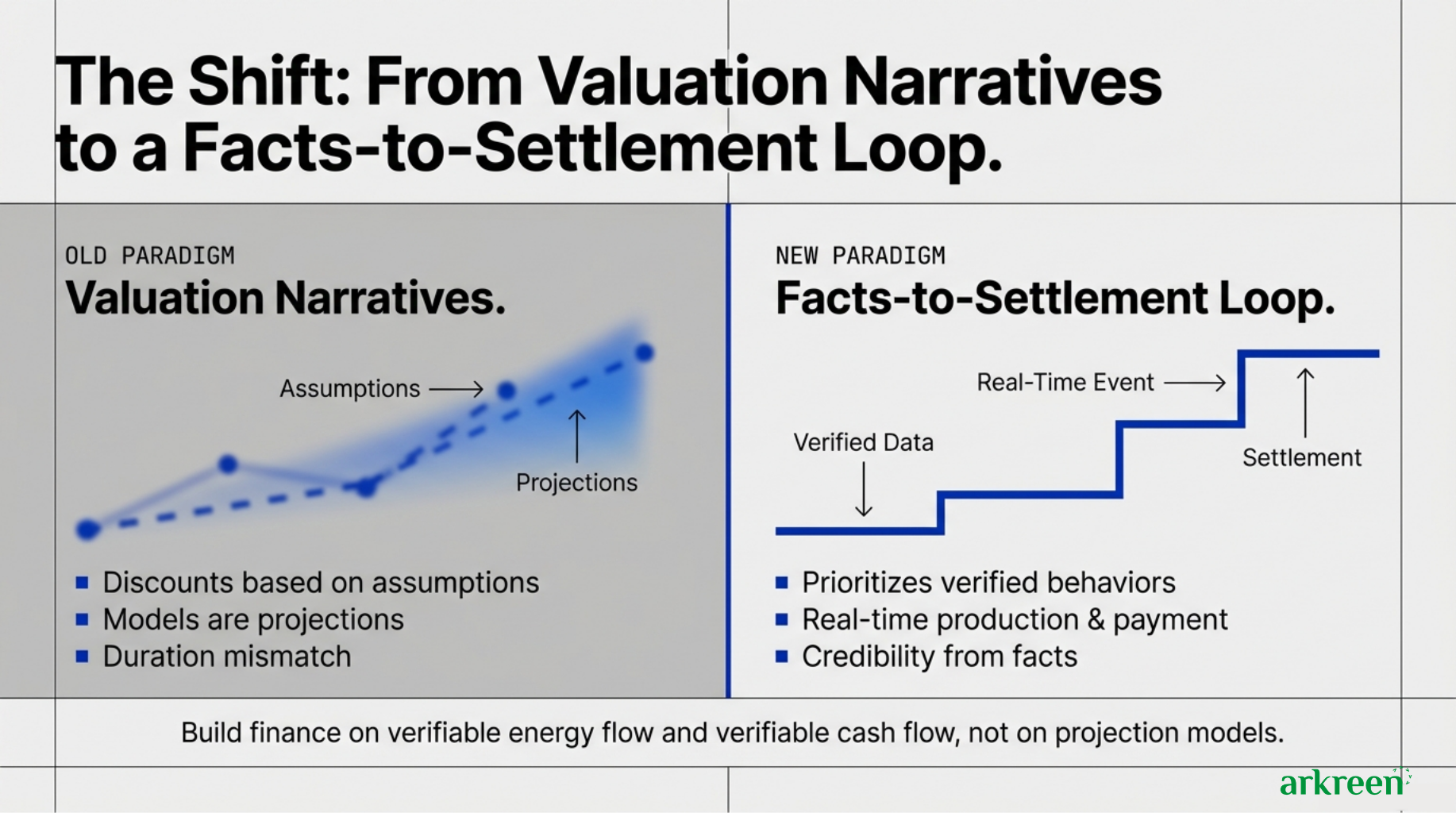
Traditional energy finance—and many on-chain RWA approaches—often begin by discounting long-duration cash flows into a present valuation, then wrapping that valuation into products designed for liquidity.
But on-chain, this path commonly introduces two frictions:
- Valuation depends on assumptions and intermediaries — models are ultimately projections
- Duration mismatch — long-term assets vs. short-term liquidity expectations can create structural stress
EnergyFi follows a different philosophy: it focuses on a facts-to-settlement loop—prioritizing the critical behaviors and signals that have already happened, are happening, and can be continuously verified—so the credibility of cash flows comes from verifiable energy flow and verifiable settlement facts, not from valuation narratives.
This is not conservatism; it’s a more fundamental choice:
build finance on verifiable energy flow and verifiable cash flow.
A Three-Layer Architecture: Separating Truth, Structure, and Composability
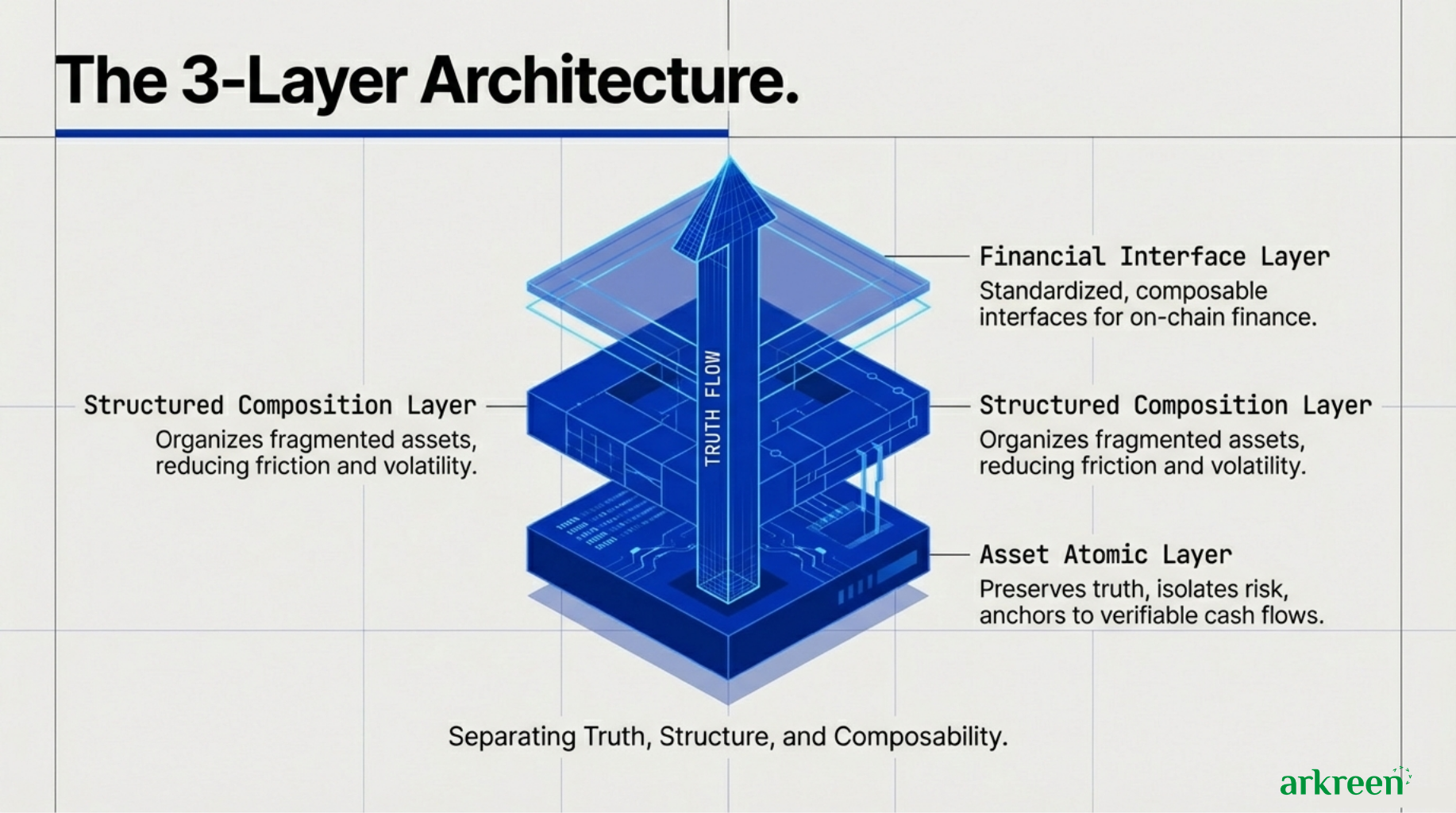
To keep energy cash flows robust in the real world while making them usable in on-chain finance, EnergyFi adopts a clear three-layer approach:
- Asset Atomic Layer — preserves truth, isolates risk, anchors to verifiable cash flows
- Structured Composition Layer — organizes fragmented assets into more usable structures, reducing fragmentation friction and single-point volatility
- Financial Interface Layer — provides standardized, composable interfaces for on-chain finance without compromising the “honesty” of the underlying assets
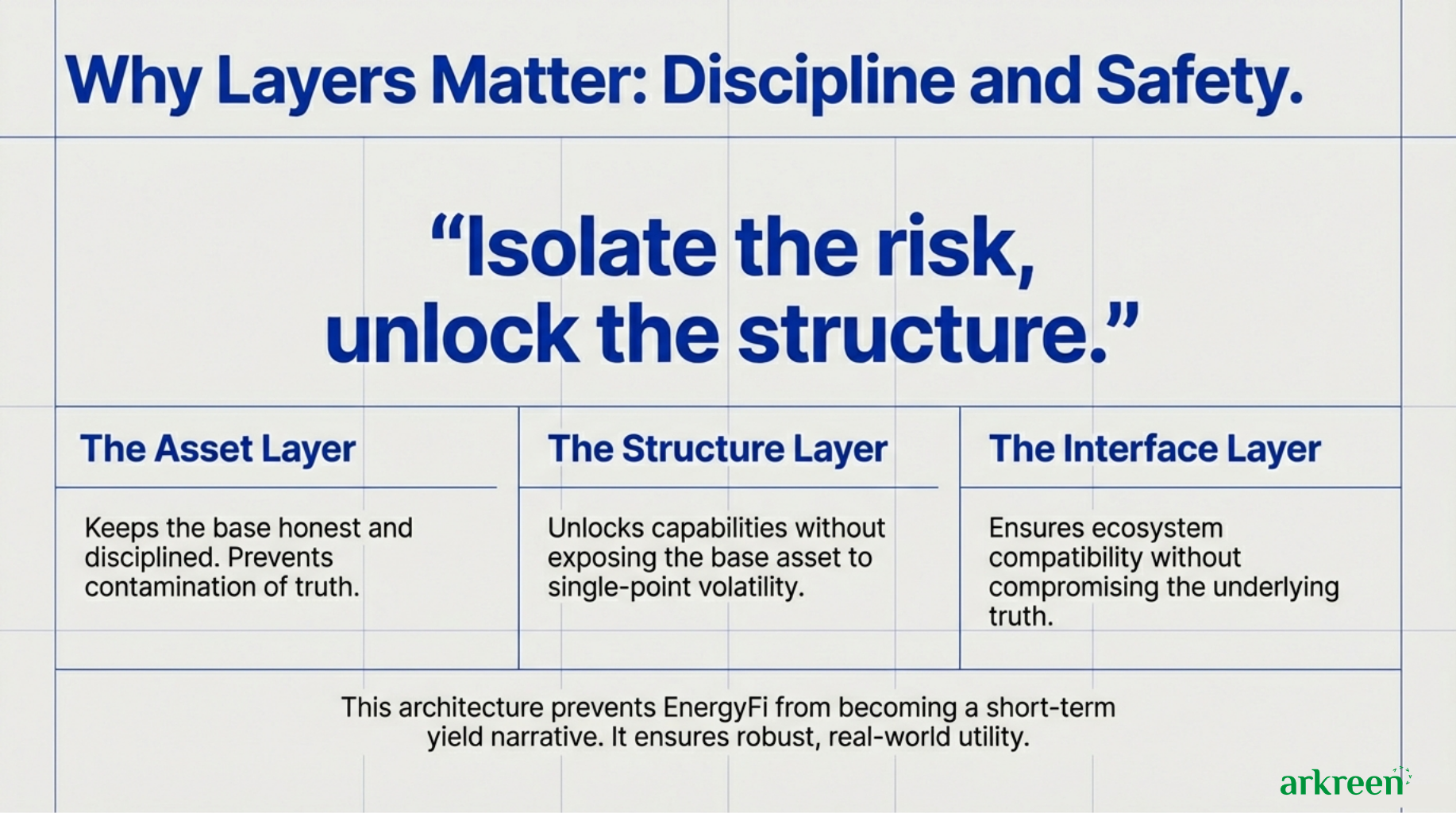
The significance of this layering is simple:
keep the asset layer disciplined, unlock capabilities in the structure layer, and stay ecosystem-compatible at the interface layer.
It helps EnergyFi avoid becoming a short-term yield narrative while leaving room for broader composability with on-chain financial modules.
(More precise definitions, terminology boundaries, and protocol details will be released in upcoming articles and the final EnergyFi Protocol Lite Paper.)
Why This Matters: Beyond Energy Finance, Toward a DePIN-to-Finance Paradigm
If DePIN is fundamentally about bringing physical-world infrastructure into on-chain economies, it inevitably faces the same question:
Why should the chain believe that something truly happened in the physical world?
Arkreen is answering that question in the energy domain—one of the largest infrastructures with the strongest cash flow characteristics—by making data the way trust is produced. With verifiable energy flow as the factual substrate and verifiable cash flow as the entry point, EnergyFi makes infrastructure finance natively usable on-chain.
When the energy-flow-to-settlement chain becomes verifiable, energy cash flows gain the conditions to become on-chain verifiable assets. And when those cash flows become programmable and composable, they are no longer merely “assets brought on-chain”—they become a new kind of financial primitive that on-chain economies can directly call and integrate.
This aligns with Arkreen’s long-term mission: connecting global green energy and enabling value circulation through on-chain commerce. From distributed nodes compounding into scale, to verifiable fact chains, to composable financial infrastructure—EnergyFi is not a short-term product. It is a long-term foundational capability defined at the intersection of energy and finance.
What Comes Next
This is Arkreen’s first public, high-level introduction to EnergyFi. A series of follow-up articles will progressively explain:
- EnergyFi’s design philosophy and boundaries
- Why the three-layer architecture is necessary, and what each layer solves
- How a trustworthy energy data network enables continuous verification for on-chain assets
- And the release of the final EnergyFi Protocol Lite Paper, including full terminology and the complete framework
The goal of EnergyFi is clear:
to make energy cash flows verifiable, programmable, and composable on-chain.
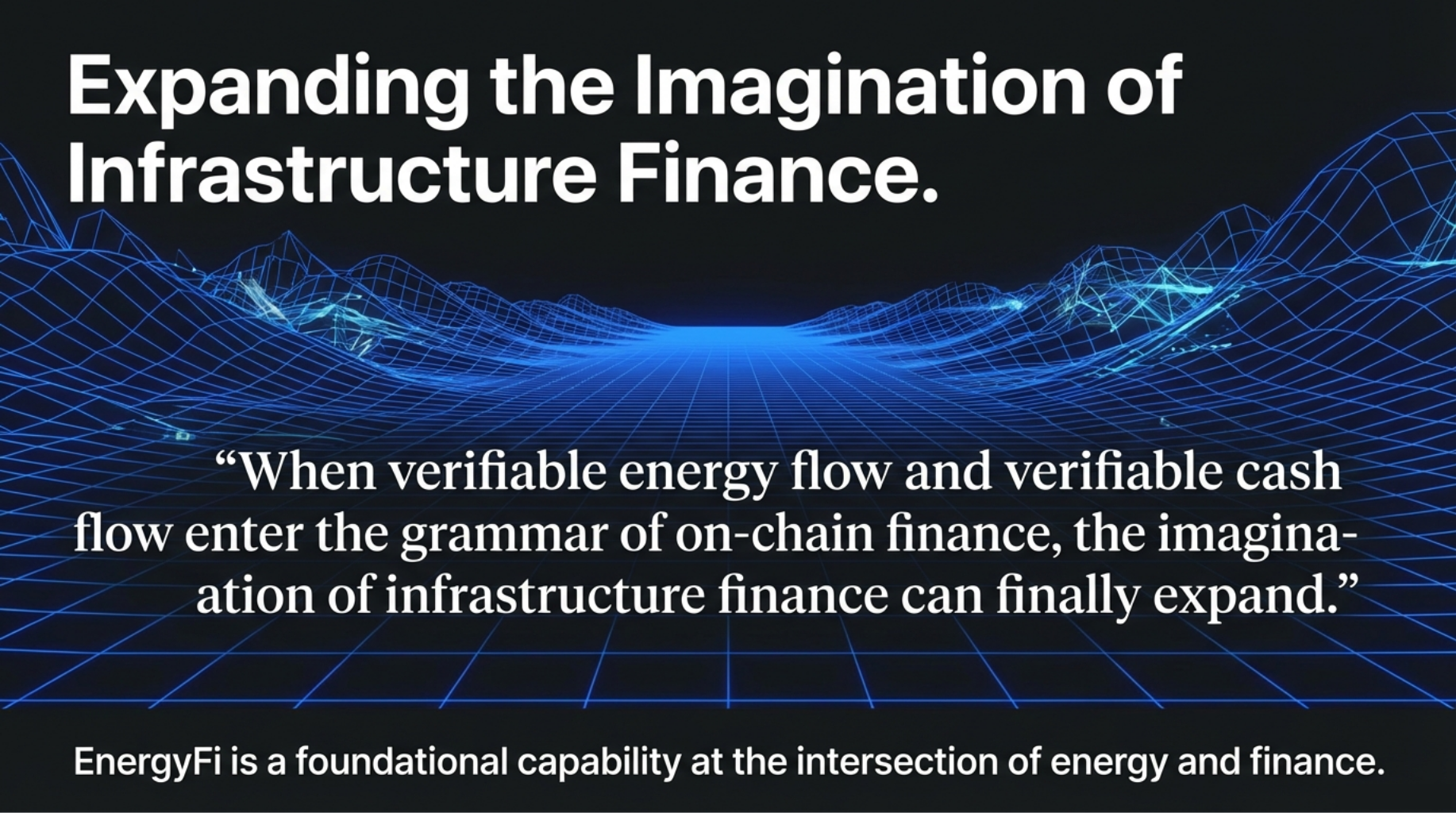
When verifiable energy flow and verifiable cash flow enter the grammar of on-chain finance, the imagination of infrastructure finance can finally expand.